


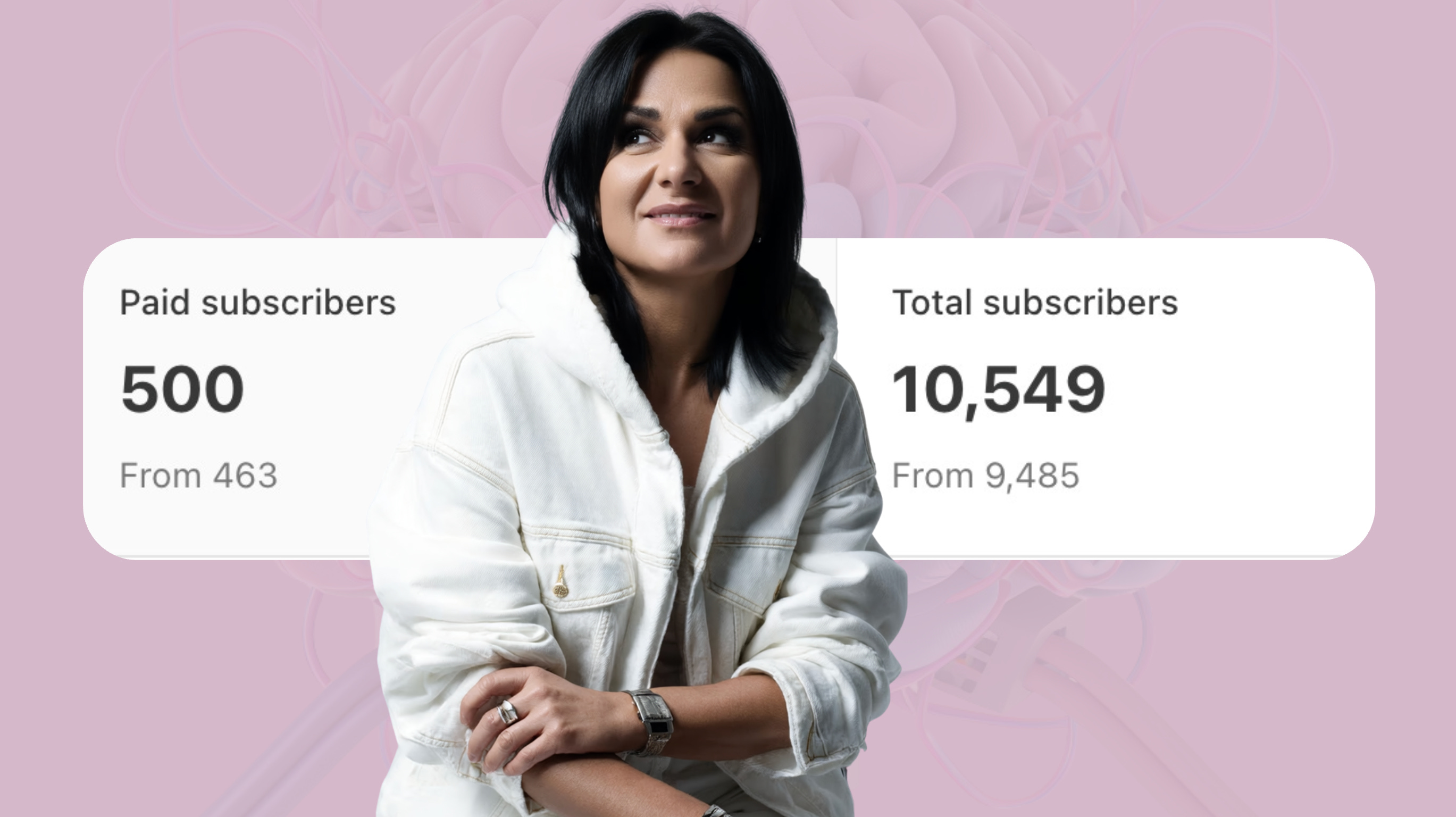
If I had to start a Substack from scratch today, after building a bestselling publication with 10K+ subscribers and 500+ paid subscribers, making a consistent full-time income of $5k to $10K a month, this is how I’d do it.
If you’re new to Substack or you already have a Substack but you feel stuck, your newsletter has slow growth and you struggle to convert paid subscribers.
Save this playbook - you’ll want to come back to it many times in the future. It has everything I wish I had on day one.
You’ll get a clear action plan with 5 simple steps you can start implementing today, plus a bunch of shortcuts I had to figure the hard way. And: the things no one talks about but every new Substacker needs to hear.
It’s long. Intentionally. It will walk you from the stage of a total beginner to the advanced level of growth and monetization.
I turned this post into a one-pager cheat sheet you can print and follow. People print them, hang them on their wall, and send me pictures 🤩
Hit subscribe to see the download button for the cheat sheets 👇
Save it. Bookmark it. Come back to it. Use the section you need right now and ignore the rest until you’re ready.
Before we start, I’m curious:
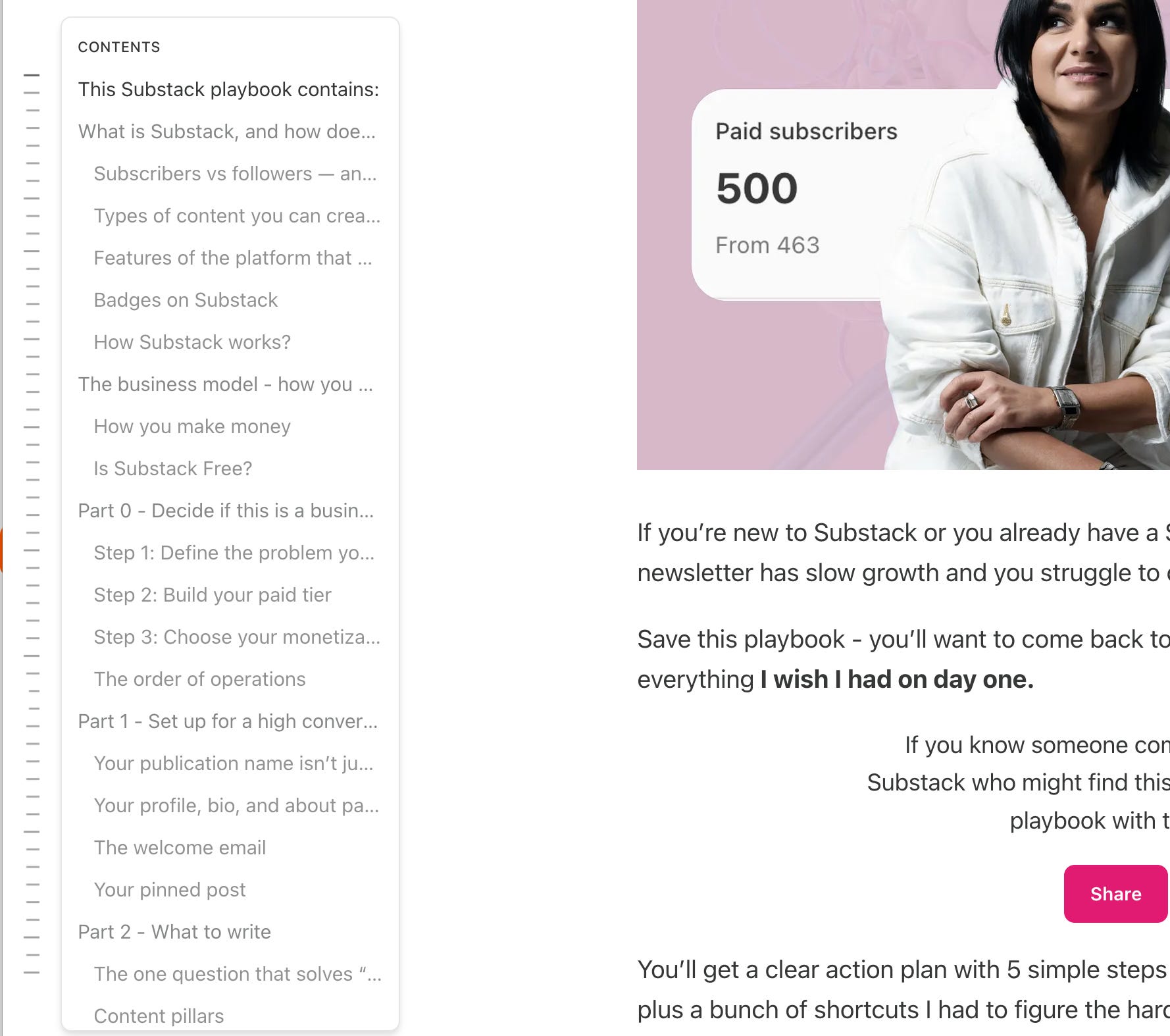
Because this is kinda long, here’s a table of contents:
This Substack playbook contains:
What is Substack, and how does it work?
The business model - how you make money on Substack?
Part 0 - Decide if this is a business or a hobby (stop here if it’s a hobby)
Part 1 - Set up for a high conversion rate
Part 2 - What to write
Part 3 - How to grow on Substack
Part 4 - How to monetize
Part 5 - How to automate and scale
The things nobody tells you (but you need to hear before you go all in)
The real secret that makes or breaks your Substack game
Hint: read this on a desktop and click on the right side to use the Substack automatic navigation - you can jump between sections easily:
Ok, now let’s deep dive!
Before the actual playbook, let’s get the basics fixed.
I’ve compiled everything I wish someone told me when I started. Because of this I wasted months in the learning curve which you can now skip.
So here it is…
What is Substack, and how does it work?
Substack is an all-in-one publishing platform - you can publish long-form posts, short-form posts called Notes (the social media of Substack), podcasts, video, and chat threads.
You have a personal profile and from it you can run multiple newsletters called “publications”.
You can host a free publication, a paid one, or both. You can build a community, run live events, and integrate digital products, sponsorships, affiliates and other revenue streams.
You can also collaborate with other Substackers, which helps you grow even faster.
The simplest way to think about it: it’s a blog, an email list, and a social network that helps you create real community - a place where we all talk to each other, create meaningful connections that can grow into friendships and partnerships.
The Substack community is the most authentic one. The conversations here feel natural, human, and deep. Not transactional like on X or LinkedIn.
And the content is of the best quality I’ve ever found.
Subscribers vs followers — and why it matters
This is one of the first things that confuses new writers, so let me clear it up.
Subscribers are people who give you their email address. They receive your posts directly in their inbox. This is the relationship that has real value - you own it, and it survives any algorithm change.
Followers are people who follow you on Substack’s social layer (Notes, the app feed) without giving you their email. They can see your Notes and your posts in their feed on the app. Much like social media, they can interact with your profile, but they don’t get your posts unless they subscribe.
The goal is to convert followers into subscribers. Email is the real asset.
How?
By using Notes, engaging with them, and collaborating with them. More about this below.
Types of content you can create
Notes - short-form posts, like tweets - can be text, image, carousel, video, you can also add links. They live in the Substack feed and are your primary discovery tool. Your subscribers and followers will see them first. If they get engagement, Substack will distribute them outside of your “bubble”. Unlike social media, people can directly subscribe to you, giving you their email address, not just follow you. Substack makes it easer to subscribe than to follow, intentionally. The entire platform is designed to help you grow.
Posts - long-form articles delivered by email and hosted on your Substack page. The core product. You can publish them without sending them as emails, or you can publish and send to your subscribers’ inboxes. Posts also get distributed in the feed like Notes, so your followers will also see them, but only in the app, not on their inboxes.
Video - video posts - you can upload, embed or even record natively on Substack.
Audio - you can add your own audio recording of your article, as well as run a full-blown podcast - upload audio episodes, host them natively on Substack, and connect them with Spotify, YouTube, Apple.
Live - you can go live - alone or with someone else. Your subscribers get notifications and can interact with you in the chat. You can then publish the recording like a video, with thumbnails and multiple short videos automatically generated out of the recording.
Chat - a community thread feature, like a group chat for your subscribers.
Emails - you can send emails to your entire subscriber base or a segment of it using predefined filters. These emails are not published on the platform.
The paywall can be placed all across these multiple types of content, so that you can create a powerful paid subscription.
You don’t need to use all of them. Most successful newsletters run on posts + Notes, and add the rest only when it makes sense.
Hint: if you plan to offer coaching services, showing your face on camera helps. A lot.
Features of the platform that help you grow
Recommendations - a native feature to recommend other publications to your new subscribers (and receive recommendations in return).
Referral program - an automated way to reward people who help spread the word about your Substack. Rewards are based on the number of free subscriptions you get from someone.
Gift subscriptions - when someone becomes a paid subscriber, they get 3 gifts with a 1-month paid membership to give to people who they know might be interested in your Substack.
Pledges - in case you’re not ready to enable paid subscription, you can enable pledges - a way for people to “promise” they will pay you when you enable the payments.
Promotions - you can use trials and multiple discounts to help sell your Substack more.
Automated upsells - your most active free subscribers will get an automated email with a special offer you predefine.
Drip campaigns - an automated sequence of emails for your free subscribers, paid subscribers, founding members, or people who decided to stop paying you so you can try to win them back. These campaigns are meant to replace the welcome emails in the future. For now they are in beta and only available to bestsellers.
Collaborations
Cross-posting - you can cross-post a post you like and decide if you also want to send it to your subscribers’ inboxes.
Guest-posting - you can contribute to another publication when you write a post for it or a snippet that can be added into a post written by multiple writers.
Mentioning (a.k.a. shout out, or tag) - you can mention other Substackers and their publications.
Affiliate - you can collab with other Substackers by promoting each others offers using affiliate links (you can simply share your affiliate links from Amazon and other sources).
Custom domains - you can move your newsletter to a custom domain for a one-time fee of $50. Worth considering if you intend to promote it on social media.
There are tons of others not so important things you’ll see in the settings, but those are the most vital ones you need to know and learn how to use.
Badges on Substack
There are three tiers of bestsellers, based on the number of paid subscribers they have. You can hide your badge if you want to.
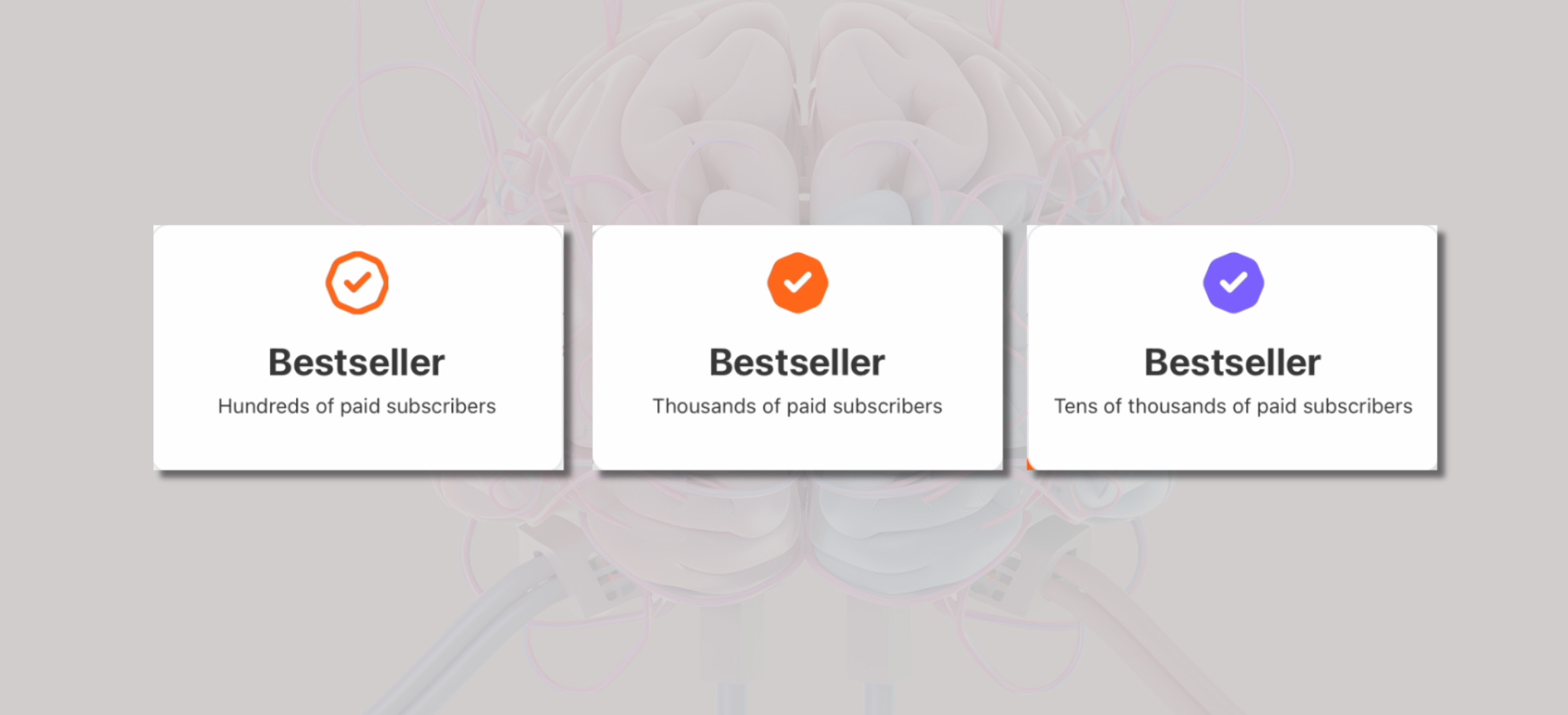
There are also petal badges, indicating whether you pay for other newsletters. You can also manage the visibility of those on your profile.

How Substack works?
You have two options - you run a hobby, or you run a business. If it is a hobby, don’t ask me for advice, you can do whatever you like.
But if you run a business, you need to focus on three engines:
free subscribers growth - new fresh leads. Post Notes, engage with others, grow your recommendations network, collaborate with other Substackers.
paid subscribers / buyers growth - new sales. Simply said, you need to promote your paid tier. Yes, you sell. This is a business. Businesses sell to survive (and thrive).
paid subscriber / buyers retention - retain existing sales. You need to build the relationship with your paid members and the value you deliver to their inboxes after they subscribe, so that they stay.
More on these below.

I’ve got a FREE Masterclass about how I turned my Substack into a $5k+/month revenue engine. Inside you’ll get the Complete $5k/Month Blueprint and a FREE Workbook to help you get to the $5k/month faster.
The business model - how you make money on Substack?
Substack existence heavily depends on people who run it like a business. There are no paid ads, just revenue share from what you earn from your paid subscriptions.
But you can monetize in multiple other ways. I’ve built an entire business around it, and the paid subscription is only 20% to 30% of my monthly revenue (you can see my breakdown here).
How you make money
There are several ways to monetize on Substack, but here’s a list of the most viable options:
Paid subscriptions — readers pay a monthly or annual fee to access your paid content. This is the core model.
Founding Member tier subscriptions — a higher-priced tier for your most committed readers. You set the price and define the benefits that come on top of the standard paid membership. The price is only annual.
Digital products — sell one-time products directly to your audience (guides, templates, courses). You have to host them elsewhere, as Substack doesn’t have one-time payments. I use Gumroad and Teachable.
Paid sponsorships — you can publish sponsored content and get paid for this. Usually works when you reach 5k subs and beyond. I use passionfroot to find sponsors.
Affiliate partnerships — promote relevant products of other Substackers or Amazon, or else. Your subscribers click, buy, you earn commission.
Coaching, consulting, done for you services — use your newsletter as the top of a funnel that leads to 1:1 work and clients to your high ticket services.
Is Substack Free?
Yes, Substack is free. You pay nothing to start your newsletter.
It’s has a win-win business model.
Substack takes 10% from your paid subscription revenue. On top of that, Stripe (the payment processor) takes approximately 2.9% + $0.30 per transaction.
So on a $100 annual subscription, you keep roughly $87 after both cuts.
There is no monthly platform fee for free publications. You only pay when you earn from Substack native subscriptions.
Substack doesn’t charge for any additional monetization activities you incorporate in your newsletter.
Basically, if you run a free newsletter monetized with coaching and courses, it’s free of charge. There’s no other platform that does that!
Important: Substack payments run exclusively through Stripe. If Stripe is not available in your country, or if you have issues with Stripe’s verification process, you cannot receive paid subscriptions. This is a real limitation — check Stripe availability in your region before you build your entire business model around paid subscriptions.
Ok, so now let’s move to the actual business.
Part 0 - Decide if this is a business or a hobby (stop here if it’s a hobby)
Most people skip this step and I believe that’s exactly the reason most people fail.
Here’s what happens:
Someone gets inspired, signs up for Substack, picks a topic they love, and starts publishing. Three months later they have 60 subscribers, no income, and a creeping suspicion that they’re doing something wrong.
They’re not doing anything wrong. They just built the house before they drew the blueprint.
So before you touch your profile, your bio, your first post, or your posting schedule you need to answer one question honestly.
Is this a business or a hobby?
Both are valid. But they require completely different approaches. And mixing them up is how you end up frustrated, underpaid, and writing into a void.
If it’s a hobby - write freely, post when you feel like it, don’t stress the numbers. Substack is a beautiful place for that. You’ll connect with amazing people, make some friends, and probably also make a few bucks.
And honestly, you can stop here, no need to go further with this playbook. Because if there’s one thing I can do best, it’s to help people build a business that converts.
But if it’s a business, you’ve got a 3-step simple strategy exercise next. Here it goes:
Step 1: Define the problem you solve
Not your passion. Not your niche. The problem.
The writers who monetize successfully on Substack aren’t necessarily the ones who write about what they love. They’re the ones who write about what they can do best (like I do). The ones who write for someone who has a specific, recurring problem, and who position their newsletter as the solution to that problem.
The question isn’t “what do I want to write about?”
It’s: who has a problem I’ve already solved, and what would they pay to understand how I did it?
Get that answer before you write a single word. Everything else - your name, your content pillars, your free vs. paid split, your pricing - comes after it.
Shortcut: Write this in one sentence: “I help people achieve [specific outcome] without [specific frustration].” If you can’t finish that sentence, you’re not ready to set up your profile yet. Stay here until you can.
For a paid newsletter, the problem doesn’t have to be huge. It just has to be real and recurring. Then make your solution difficult or impossible to replicate - that’s how you stand out. I’ve mapped exactly how I did it here:

Step 2: Build your paid tier
This is the part of my philosophy that surprises people most.
Most writers think the sequence goes: write → grow → monetize.
My sequence was different: monetize → write → grow. And that’s how I managed to build a full-time income on the side of my 9-5.
Here’s what I mean.
If you wait until you have an audience to figure out what you’re selling, you risk building the wrong audience. You attract readers based on your free content, and if your free content isn’t pointing toward a clear paid offering or isn’t connected to what you plan to sell in the future, you’ll convert almost none of them when the time comes.
The paid tier isn’t something you add later when you’re “ready.” It’s the destination you design the entire publication around from day one.
When I launched my Substack I enabled the paid tier immediately. And I got 3 annual paid subscribers on the spot.
Tip: You don’t need to have the product fully built before you launch. You need to know what it is. Even a rough answer like “I’ll a deeper strategic frameworks and templates to help people solve [this specific problem]”
You can build your paid tier in public - one post at a time. Actually, that’s how authors write and monetize their book - chapter by chapter.
Step 3: Choose your monetization model before you set up a single thing
There are two fundamentally different ways to run a Substack. They look similar from the outside but they require completely different setups.
Model A: Substack as the product. Your paid subscription is the business. Readers pay for access to your content - deeper frameworks, templates, research, analysis, community. Everything you publish either attracts subscribers (free) or converts them them to paid. This is the model I run.
Model B: Substack as the funnel. Your newsletter is free. The business lives behind it - courses, coaching, products, services. Substack is how people discover you and learn to trust you. You monetize off-platform.
Neither model is better. But they produce completely different editorial strategies, content ratios, posting frequencies, and growth priorities.
If you don’t know which model you’re running, you’ll make decisions that contradict each other. You’ll write free content that undercuts your paid tier, or you’ll push paid subscriptions when your readers actually want to hire you for a high ticket service.
Decide this now. Then set up everything else.
The order of operations
This is the sequence that actually works — based on what I’ve seen across hundreds of writers and what I’ve built myself:
Define the problem you solve. No need to define the person who has it
Choose your model - Substack as the product, or Substack as the funnel
Design your paid tier or core offer - at least in outline
Set up your publication to reflect that positioning
Write free content that attracts the right reader and points toward the paid layer
Write paid content to convert free subscribers to paid (skip if you run a free newsletter)
Promote. Promote. Promote. In both cases you have to sell. And it’s best to sell without actually selling.
Most people start at step 4. Some start at step 5. Almost nobody starts at step 1.
That’s the gap. And it’s the reason two writers can publish on the same topic, with similar quality, for the same amount of time — and get completely different results.
Now. With that in place, let’s build your high-converting Substack.
Part 1 - Set up for a high conversion rate
I sell (without selling) at every possible place I can, that’s partially how I keep a high conversion rate (the rest is automated - more below).
Here’s a list of the most important elements you need to clearly communicate your paid tier, product or service.
Your publication name isn’t just branding
Here’s the mistake I see constantly.
Writers name their newsletter something vague and poetic, then spend the next year trying to explain what it’s actually about.
“Wandering Thoughts.” “The Weekly Pulse.” “Scattered Notes.”
Or just put their name on it.
Fine if you’re in the hobby scenario. Terrible at converting readers into subscribers.
Especially if you want to build a business.
I named mine “Unplugged” because I write about AI and automations, helping people unplug themselves from the grind and plug AI into work. And also because it’s the raw version of who I am, as Substack is the only place I can write like that.
Make your name point the problem you solve, even if it’s indirect (like in my case).
Test your name before you commit. Say it out loud to 3 people who don’t know you and ask: “What would you expect this newsletter to be about?” If they can’t guess, rethink it. This takes 10 minutes and saves months of confusion.
Tip: Your publication name and your Substack URL are two different things. You can change the name later. You change the URL without breaking every link you’ve ever shared only once. Choose it carefully.
Your profile, bio, and about page
Most writers treat these like an info pannel. They’re not.
They’re sales pages.
Lead with the reader’s problem, not your CV.
Nobody lands on your about page thinking “I wonder who this person is.” They’re thinking “what’s in it for me?” Answer that question in the first two sentences.
Tip: Write your publication description in second person first: “If you’re trying to [achieve outcome] without [frustration], you’re in the right place.” Then introduce yourself. The reader always comes before you do.
Write your bio for them - say how you help them first, then say who you are. Your bio shows up everywhere - search results, Recommendations, your profile card. It has to work out of context, without the rest of your page around it. Write it like a standalone pitch, not a chapter of your memoir.
Use a photo that looks like a real human, not a LinkedIn headshot. Substack is personal. People follow and subscribe to people they feel they know. A warm, real photo does more work than any credential.
If you don’t want to show your face or tell your real name go with a pen name, but make sure your profile picture looks human.
When I started I wanted to keep my profile secret, separated from my day job. So I published a photo where I wear sunglasses and my face is barely visible - people couldn’t tell it’s me. It’s a way to approach this.
Make your about page for them, not for you. I talk about what’s inside and why tey should upgrade immediately.
The welcome email
Your welcome email is statistically the most-opened email you will ever send. Open rates of 50–80% are completely normal. Some writers hit 90%.
Here’s something most new writers don’t know: it’s also the one with the highest conversion rates.
And most people send two sentences. Or keep Substack defaults.
Set expectations + make them feel something in the first 3 lines. Then pitch your paid tier - give them a reason to upgrade on the spot.
More than 20% of my paid subscribers upgraded on day 1. Make your first email count.
Tip: Ask a question at the end of the welcome email. A real one, not a formality. Replies train Gmail to put you in Primary, not Promotions. This matters more than most people realize.
Your pinned post
This is the highest converting post I have.
Your pinned post is prime real estate.
Most writers waste it on a welcome note nobody reads twice. I pin a “Start Here” guide that links to my top paid pieces with a soft nudge to upgrade explaining what they miss if they don’t
Most people spend 5 minutes on setup and years paying for it. Don’t do that. Here’s a post where I deep dive into this:

Hint: The most common mistake I’ve seen during my reviews: inconsistent messaging across all of the above places. Use the same wording when you communicate your benefits. Most people need to hear the same thing multiple times before they buy. It’s how you build trust. It’s how you create what I call “confirmation moments” - small steps that move a reader to a become a buyer.
Part 2 - What to write
The blank page problem is actually a positioning problem. When you nail positioning, you’ll never run out of ideas to write about.
The one question that solves “what do I write about” forever
Most writers approach this as a content question.
It’s not. It’s a positioning question.
The best newsletters aren’t written by people with the most credentials. They’re written by people who figured something out the hard way and are honest about what that looked like.
Tip: The best content angle sits at the intersection of three things - what you know deeply, what people keep asking you about, and what you’d write even if no one read it. If all three overlap, you’ve found your lane.
Go into your sent emails, your DMs, your comments right now. The questions people ask you unprompted are your editorial calendar. Write those answers first.
Content pillars
If your newsletter covers more than 3 topics, it covers nothing.
Readers can’t recommend what they can’t describe in one sentence. And recommendation is big part of how any Substack grows.
Tip: Name your pillars like columns or frameworks. Not “personal growth” — “The Anti-Hustle Files.” I named one of mine “Write2Sell” not “marketing tips”. A named column becomes a brand inside your brand. It increases the perceived value of your offer.
Rotate your pillars in a predictable sequence. Readers form habits. When Tuesday feels like “data breakdown day,” they show up for it.
Free vs paid content
Free posts attract. Paid posts convert and retain.
Honestly, I thought paid post need to be more, but when you have a good positioning and when you write about the product you solve and point to at least one of your offers in every post, even free posts will do the heavy (sales) lifting.
My latest analysis showed I have a ratio of about 50/50.
Post formats that work
Long-form essays. Personal stories with a lesson baked in. Data breakdowns using your own numbers. How-to frameworks. Hot takes. Interviews. Behind-the-scenes posts. Curated round-ups.
The top 3 posts that worked really well for me so far:
Analysis post - where I deliver the outcomes of my latest analysis with AI
Case study posts - where I showcase how I (or someone else) achieved a great result
Tangible asset drop - where I explain how to use my latest AI tool, give an AI prompt or some
I also see good performance of the hot take type - a contrarian opinion, argued thoroughly, the interview type - a live with a recording published later, and the behind the scenes - where I share how I built stuff.
The community is a big growth driver. Start your chat, runs some challenges, do a community live call. Connect with your audience - that’s how you maintain high retention rates.
On video: I know video is uncomfortable for most people but on Substack you can be who you are. This is not YouTube. You don’t need to be polished. Just go live, share the recording, see what people say about it. It’s the fastest way to build trust.
How often to post
Here’s the honest answer.
The more you post, the more you’ll earn.
Now, I know this is not something most people like, but it’s what data shows me. It’s proven industry standard.
Do you need to publish on the same day and time every week? Not so much, I thrive in chaos.
Gurus say readers form habits, so you have to pick a day, tell your subscribers, then protect it like it’s a meeting with a very important client. But the one thing I can confirm is that Tuesdays and Wednesdays are the best time to send emails.
Everything else is noise.
As for Notes - I do about 10 per day. Substack recommends 3 to 5, and I also know people who do really great with about 3 per day.
It’s all about the content.
I’ve built a custom GPT that writes viral Notes - brought hundreds of subscribers to me and my most committed paid members. I use it to solve the Notes daily task in just 15 minutes.
Tip: Schedule posts in advance. Substack lets you queue them. Write on weekends, schedule for Tuesday. Batch your Notes on Sunday for the week. Your readers don’t need to know your process, they just need to see you show up.
Your first 10 posts
Don’t start with whatever feels easiest. Start with what builds the fastest trust.
Post 1: Your origin story - why this newsletter, why now, why you specifically
Post 2: Your strongest contrarian take in your niche
Post 3: A personal failure and what you learned (vulnerability builds loyalty faster than expertise)
Post 4: A data-backed breakdown of something your readers care about
Post 5: A “how I actually do X” behind-the-scenes
Post 6: The answer to the most common question you get asked
Post 7: A curated resource list (easy to write, high shareability)
Post 8: A hot take - one hill you’ll die on and why
Post 9: A reader story, case study, or interview
Post 10: Your contrarian take - what you believe about your niche that most people get wrong
Tip: Don’t wait until post 10 to have a point of view. Have one in post 1. Opinions attract subscribers faster than information. Information is everywhere. A specific perspective you can stand behind is rare.
Tip: Cross-link your first 10 posts to each other as you go. Build the web early. New subscribers binge. Make that binge as deep and interconnected as possible.
The most common mistake I see: people try to get others to like them, so they aim to be rounded, polished and ultimately boring. Or they overuse AI. Here’s the essence of how I actually write - you don’t need to know anything else:

Part 3 - How to grow on Substack
Growth isn’t random or viral. It’s actually better not to go viral - the quality of the subscribers you can get with consistent growth is much better than a viral spike.
With a newsletter business, you have three core engines you need to move together:
Convert readers to free subscribers
Convert free subscribers to buyers (paid subscription, product or service)
Retain buyers so that your business grows
Once you get that done, you’re ready to scale.
Substack’s built-in growth engine
This is the most underused, highest-ROI growth mechanism on the platform.
When someone new subscribes to any Substack, the platform shows them a list of recommended publications. If you’re in those Recommendations, you get passive subscriber growth around the clock — without publishing a single additional post.
Go to your Substack dashboard → Grow → Recommendations. Recommend someone you love. Substack will send them an email notification asking them to recommend you back.
When you recommend someone, tell them. It opens a natural conversation. Conversations turn into collaborations.
You don’t need 10K subscribers to start getting Recommendations. You need one writer with an overlapping audience who trusts you enough to recommend you. Start there.
Notes - the most underused tool on the platform
Most writers treat Notes like a social media feed they’re supposed to post on.
That’s not what it is.
Notes is a powerful discovery engine. When you post a Note, it surfaces to people who don’t follow you yet, through the people who do. It’s the closest thing to organic reach Substack has ever offered. Yes, it looks like social media, even Substack calls it like that now.
But unlike social media, it is more a conversation starter. A connection invite. An extension of your post.
The core difference: Substack algorithm works to get you subscribers, not followers. There is a one click “subscribe” button next to your Note.
Here are the ONLY 5 Notes templates you need to grow your subscribers on Substack:

Subscribe. Not Follow.
It’s social media done right.
In the comments, you’ll see real discussions, not just one-word comments aiming to get an automated DM with some kind of freebie.
My first Note that genuinely took off and went viral was a story about my mom. Because of it I quickly learned that viral is good, but consistent growth is better. The quality of the subscribers is much higher.
The Notes that get reshared have one thing in common — they make the reader feel seen. Not impressed by you. Seen by you. Write for recognition, not admiration. “I felt this” beats “wow” every time.
I frequently get comments of the sort “I needed to hear this today, thank you Yana”
Respond to every comment on your Notes. I often get a bunch of new subscribers after I respond all of my comments. I try to do that daily, but sometimes because of my job I do it in the weekend.
Repost other people’s Notes with a meaningful comment added. Not “great point!”, but a genuine extension of the idea.
Screenshot your best data and post it as an image Note. Numbers stop the scroll every single time.
Batch your Notes. Write 7 in one sitting on Sunday. Save as drafts or schedule them. You don’t need to be on the platform daily, you just need to appear to be.
Cross-promotion and collaborations
One deep collaboration beats ten shallow ones.
The easiest collab format is to write one section of each other’s newsletter on a shared topic. Low lift, genuine value, new audience exposure. Neither of you is doing extra work, you’re redistributing it.
Co-host a one-time free event, a live conversation, a shared challenge, a joint thread. Events create urgency. Urgency drives sign-ups from people who were sitting on the fence.
Create partnerships for continuous collaboration with people who fit your business and audience. Even of you see them as your competitors. This is help you both get more exposure to external audience.
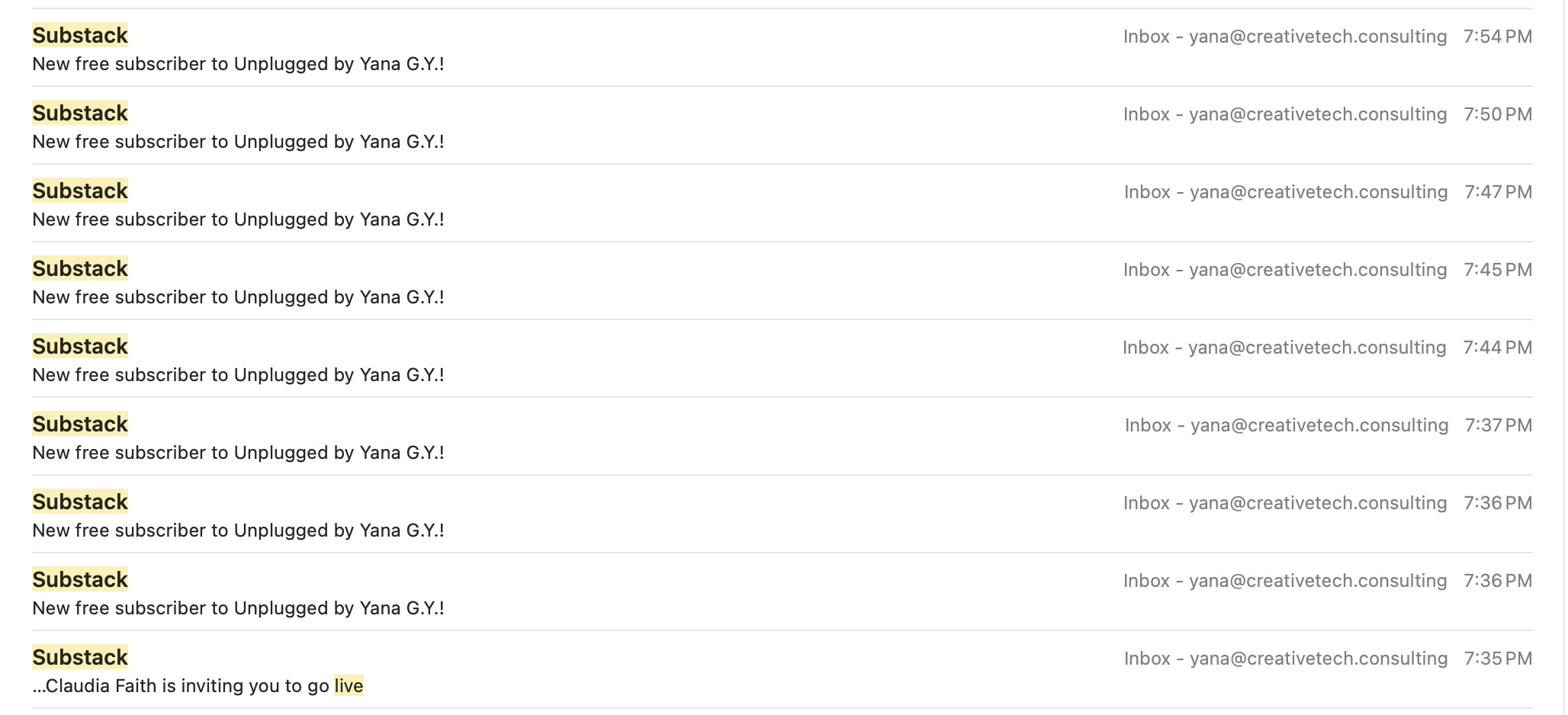
Here’s how I got 8 new subscribers from a single live:
Growing from outside Substack
Pick one external channel, master it, then funnel it. It does’t have to be social media, can be Medium or some kind of a community where you’re active.
It you don’t have any, stay with Substack and go all in.
I decided to try growing on social media with automations and paid ads. I don’t want to invest any effort in organic growth as it requires a lot of time which I don’t have because if my 9-5.
But some social media are way much bigger than Substack (like facebook and YouTube), so it’s still a good way to grow faster when you leverage your presence there.
YouTube is integrated with Substack, so you can post your videos automatically on your YouTube channel. Just make sure you optimize it so that it’s distributed well on the platform. I got a coaching client from my channel, and all I do is to report my lives and spotlights there - videos I already do for Substack.
LinkedIn is the most underrated feeder channel for Substack right now — especially if your audience is in the professional field. One post that lands well on LinkedIn can bring in 200+ subscribers overnight.
Add your Substack link to every email signature, every bio, every platform you’re already on. This is free growth you’re leaving behind every single day if you don’t do it.
If you’re on Medium, link to your Substack at the end of every post. Medium readers are already newsletter-shaped. They convert at a higher rate than most other traffic sources. I get free and paid subscribers frequently and my conversion rate is about 20%!
SEO & AI SEO
Write 1 evergreen pillar post per month targeting real search terms and let them work while you sleep. I’m getting traffic, subscribers and coaching clients from Google, ChatGPT and Claude.
Use your primary keyword in the first 100 words, in at least one H2 subheading, and in your preview text. That’s 80% of on-page SEO done in 5 minutes.
Make sure your images have proper file names and alt texts.
Substack’s preview text field is your Google meta description. Most writers leave it blank. Write 150 characters that include your keyword and a reason to click. Don’t waste it.
Part 4 - How to monetize
People will pay. You just have to make it easy, obvious and no brainer.
Paid or Free newsletter
Even if free newsletters feel easier, there’s a list of pros and cons you should know before you decide:
Free Newsletters - Why Choose Free?
Simple & Easy: Free newsletters are straightforward. You write, grow your audience, and build trust.
Monetize from day 1: Even without a paywall, you can monetize right away through:
Selling digital products (like courses and ebooks)
Affiliate marketing
Sponsorships
Faster growth: Free posts tend to viral - it helps you grow faster on Substack, especially if you’re active on Substack Notes (the social media of Substack). And if you have a solid portfolio of offers, you can easily grow to 6 figures in just a few months.
The Downsides:
Needs constant creation of new offers on top of your content: Selling the same digital product to the same subscriber is impossible. You need to build a new offer (ideally) every month to maintain a 6 figure revenue and grow from there.
More sales skills required: You’ll need strong marketing and especially copywriting skills to continuously sell digital products. And there’s the additional effort required in building the digital products, setting the landing pages and building the sales funnels.
Against Substack’s business model: Substack thrives on paid subscriptions, so there’s always a risk they might limit free content distribution in the future (just a hunch, no data to prove that).
Paid Newsletters - Why Choose Paid?
Aligned with Substack’s model: Substack’s tools are designed to support paid subscriptions, and the platform prioritizes features that help you grow a paying audience. It’s the best place to grow a paid newsletter, because Substack specializes ONLY in that business model, so the tools and features are state-of-the-art. Substack literally helps you sell more subscriptions.
Your content Is the offer: With paid newsletters, your content itself becomes the product. You don’t need to constantly create new offers—you can even build digital products in public, one piece at a time. You can write a book or build a course chapter by chapter and paywall it.
Low pressure - you can build your catalogue in public, no need to create products upfront.
Long-term income: Paid newsletters compound over time. With each new subscriber, your recurring revenue grows.
The Downsides:
More Complex: Running a paid newsletter is running a business. But not any kind of business, it’s a subscription business. One of the most complex business models. Yet, one of the sweetest and most lucrative ones because of the faulty belief people will continue to pay indefinitely. You’ll need to keep providing tangible benefits to your subscribers (e.g., tools, guides, case studies). And you need to retain them (no need when you sell one-time offers). You need to build relationships.
Takes Time: Paid newsletters don’t scale overnight. You’ll need patience to see the compound effect. You don’t get to the 6 figures fast, but rather steadily.
So, What’s the Best Approach?
For me - both are demanding, you have to choose your poison, or do both. That’s how you get the best of both worlds.
When to turn paid on
Let me save you the debate.
Immediately. And make sure you have at least 3-5 posts from your paywalled content already published before you launch your Substack.
When your content consistently delivers one clear, specific outcome to one specific type of reader.
“Ready” is a feeling. It never arrives. Turn paid on when your content is consistent and your positioning is clear, not when you hit an arbitrary number. Positioning without a big number still converts. A big number without positioning doesn’t.
And if you want to grow your audience first, without any clear vision about how you’ll monetize, you’ll probably find out that you have built the wrong audience.
It happens so often.
That’s why I built the SUBSTACK QUEST - it’s the exact model you need to follow, step by step, to build and launch a high-converting Substack.
Pricing and what actually converts
Annual plans convert better than monthly, and most writers don’t push them nearly hard enough. My share is more than 90% annual.
Make it feel like a no brainer.
For an annual I’d stay below $50 and I’d increase the monthly so that there’s zero rationale to buy it. That converts, but only if you nail the positioning and build a killer offer, one that sells itself.
Now there’s one thing most people avoid telling you and I had to learn it the hard way:
You have to promote your paid membership, product or service all of the time. At any place possible. Or it won’t sell.
Most people think it’s enough to publish one post about it.
It’s not.
Because who’s gonna buy it if no one knows about it?
Here’s how to write your posts so that your offers sell themselves:

The post-subscription experience
This is where most writers completely drop the ball.
According to the state of newsletters report from Beehiiv, over 80% of independent newsletters aren’t using any automation beyond a basic welcome email. That’s a huge opportunity cost.
My data shows that 71% of my paid subscribers converted within the first 30 days after subscribing. If you don’t do anything within this window, you’re leaving money on the table.
Run a welcome sequence, deliver value, build trust, then pitch your offer.
Substack has native automations, but at the time of writing this they’re still available only to bestsellers. Even though I can use them now, I still run my automations in Kit, just because I have complete functionality.
Here’s how I set my welcome sequence that sells my paid subscription so that I don’t have to promote. It alone brought me more than 150 paid subscribers so far.

Retention is the name of the game of the paid subscriptions. Make sure you have a quality service or your paid subscribers will churn.
I can’t stop repeating this. It’s the core of any subscription business and I know it not only from Substack - from my 15+ years in product sales and marketing of paid subscriptions for consumers and businesses, generating billions per year.
My retention is quite good on Substack because I know this:
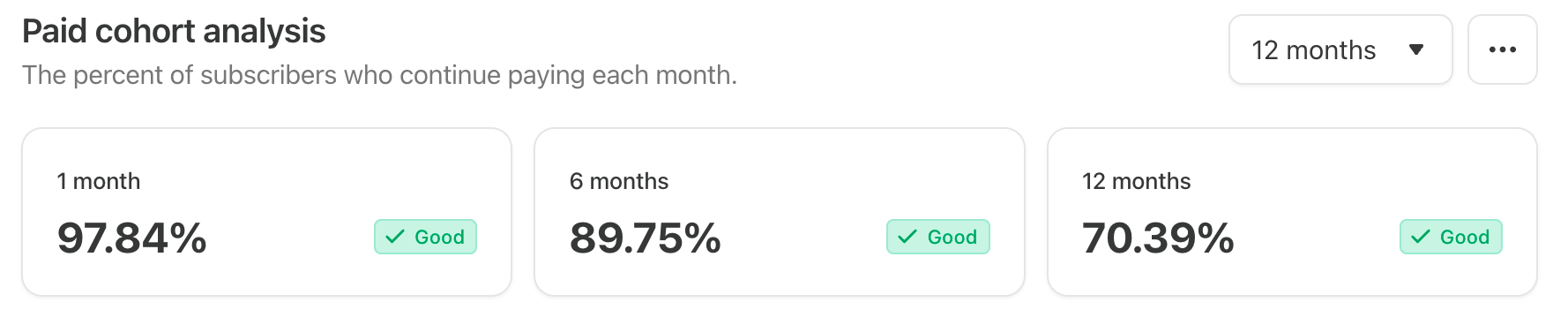
Simply said: take care of your people.
How to paywall and send emails
One of the main reasons why I have a high conversion rate is that I send every email to all subscribers. Yes, even the paywalled ones.
My way of paywalling delivers a lot of value for free and keeps only the tangible stuff paid. So when my free subscribers receive a paid post they don’t unsubscribe.
Here’s what I do:
Keep the WHY and the WHAT for free
Add some proof it works
Add some results it delivers
Keep the HOW to implement it paid
That’s my conversion engine in a nutshell.
Beyond subscriptions
Once you have a consistent paid subscribers growth, its’ time to build more income streams.
I now run a $5k-$10k a month newsletter, but the paid subscription is merely about 30% of it.
Digital products. Courses. Templates. 1:1 coaching. Affiliate partnerships.
I use my paid subscription to validate a potential new product, here’s the workflow:
Write a paid post about the core problem and it’s solution
If it resonates, if it brings new paid subscribers, then you’re on to something
Expand it into a product out of it and sell it to your entire subscriber list. Paid members can have a discount.
Buyers will buy again. That’s why is so important to retain them. Make sure you have a quality paid service and also have offers for your paid subscribers so that your business grows.
Affiliate partnerships work on Substack when the product is genuinely relevant. One authentic mention in a high-traffic free post can generate meaningful income with zero extra content creation.
Part 5 - How to automate and scale
Two hours a day. That’s all this takes for me now, but only because I stopped doing it the hard way.
When I started it used to take me almost a day to write a paid post. And a couple of hours to come up with a good Note.
Writing is a muscle, you have to train it every day. It gets easier with time.
But I also added my minions into the game - my AI agents that help me stay sane along with my 9-5, and still have some quality time with my partner, my dog and our friends and families.
I have a GPT that writes highly engaging Notes for me, designed to bring me subscribers.
I have one GPT that writes long form, one for CTAs and one for Titles and subtitles.
They’re all available to my paid members because this is what I do on Substack - test, prove, enable for my people to help them speed up growth.
AI without sounding like a robot
The writers who will be unbeatable in the next 3 years aren’t the ones who refuse to use AI or the ones who outsource their voice to it. They’re the ones who use it to think faster and edit cleaner, while keeping every word unmistakably theirs.
Read your AI-assisted draft out loud. If you stumble, your reader will too. If it sounds like a LinkedIn thought leader wrote it, rewrite it.
Use AI to generate your first outline, not your first draft. The structure is the hard part. The voice is yours, and no prompt can replicate the specific way you see the world.
Build a custom AI skill with your voice, your frameworks, and your editorial standards. A generic prompt gives you generic output. A voice-encoded skill gives you a first draft that sounds like you wrote it on a good day. Here’s how I do this:

Repurposing
Of course you can repeat yourself. One idea shouldn’t live in one place. Actually people need to hear it more than once before they make a decision.
One long-form post can become: an email broadcast, 3–5 Notes, a LinkedIn post, a video script, and a short-form clip. Same thinking. Five formats. Five audience touchpoints.
Tip: Your best Notes often started as a paragraph in a long-form post you almost deleted. Mine your drafts. The throwaway lines are sometimes your best standalone ideas.
Automations
Substack doesn’t have an official APIs which is one of the heavy burdens for someone who love automations. But this is how Substack maintains authenticity and quality of the content, and they’re serious about it.
Make sure you read the content guidelines before you think about anything automated.
Besides the welcome email sequence I shared above, I also have an automated webinar that sells my digital products - this converts and 10%, brings me another 30% of my monthly revenue, and I do nothing about it.
I’ve automated my social media post entirely and I don’t expect anything since I don’t engage but I do get subscribers.
And I’m just starting.
Automate anything that can be outsourced to a machine, but make sure you keep the quality high and you don’t risk your account.
Because time is our most valuable resource.
How to scale
Scaling isn’t doing more. It’s doing the right things more often.
The 4 metrics that actually matter
I make data driven decisions. That’s how I scale.
I know most people hate data, but it holds the answers to all of your growth pains.
Just look at what resonates, what works, what doesn’t and double down on that.
The data and the metrics that matter most:
New subscribers growth & sources
Free to paid conversion rates
Paid subscribers NPS
Paid subscribers retention rates
NPS is the early signal you should track to understand how your paid membership is doing. The good thing is Substack has the survey feature we can use to measure it. I’ve created a template that calculates it automatically here:

I don’t care that much about open rates, click rates and engagement. It is a signal when I decide what to create next, but it’s not so relevant to judge whether my business is growing or declining.
The above four are.
Tip: Conversion rate below 3%? Positioning problem. Retention rate below 50%? Product & customer service problem. New subscribers growth less than 5-10/day? Discoverability problem. NPS below 60? Future retention problem. Every metric tells a different story.
The things nobody tells you (but you need to hear before you go all in)
Ok, now here comes the tricky part.
This is my brutally honest take on Substack for the 2 years I’m on the platform.
I firmly believe Substack is the place to be right now if you want to grow a sustainable business online. Still there are few things to have in mind before you go all in.
This post would be dishonest without this section. So here’s what I’ve actually run into, and what you should know before you go all in.
Platform limitations
The all so many notifications bring deliverability problem. Substack sends a lot of notifications. Every Note, every comment, every recommendation, tons of it. Readers get notification fatigue and start ignoring them. Some disable them.
The app has an option to disable all email notifications and read everything in the app. This prevents you from receiving emails from people you subscribed to.
It’s a real deliverability problem which can impact your conversion rates. Especially with the way I promote my paid subscription (as described in the paywalling part above).
For comparison: my deliverability on Substack is about 95% and 100% on Kit. It’s not a big deal, but it exists.
The sales tax nightmare. If you have paid subscribers in the US, sales tax obligations vary by state. Substack doesn’t handle this for you the way other platforms like Teachable, Gumroad and Kit do.
As you scale, this becomes a real compliance question. Talk to an accountant before you hit significant revenue.
I handle this using Stripe tax and some US based services.
The failed payments problem. Stripe’s dunning system (the process for chasing failed subscription payments) is not very sophisticated. Failed payments happen more than you’d expect, and the recovery rate isn’t always great.
Some subscribers lose access without realizing it, some churn accidentally. It’s a leaky bucket you have to monitor closely and fix manually. You’ll face this once your paid subscribers start to renew their subscriptions.
No personalization, tagging, segmentation, or real automation. You can’t tag subscribers by interest. You can’t send different emails to different segments. You can’t build complex automated flows. The sequence feature is very basic right now. If you’re used to proper email marketing tools like Kit or Mailchimp, the limitations here will frustrate you.
No landing page builder. You can forget about lead magnets. At least in the classical way. I have a page explaining that my lead magnet comes after subscribing but people get confused.
You can read the comments on my page:

Your Substack welcome page is your landing page, full stop. If you want a custom opt-in page with your own design and copy, you’re building it somewhere else and redirecting.
This limits my paid ads activities A LOT. I recently found a way to work around this is that I can get a decent cost per lead, bit’s not optimal. I raised this to Substack, other did too, but so far we have no feedback. It’s a basic feature most email platforms have. I mean, that’s BASICS.
The UX is still a work in progress. It’s a blog, but without submenus or proper navigation. Even with the recent update of the headers and footers, it’s still basic.
Posts in the app can’t be saved as drafts and continued on desktop, and there’s no workaround.
If you serialize video content, like a course, it’s not very convenient for the user to consume - no way to mark as completed or an easy way to move to the next video (we have such a button but it’s hidden at the bottom of the post).
The profile vs. publication distinction confuses new users constantly. Some features that feel like they should exist simply don’t.
In-app purchases on iOS are painful. Apple takes its ~30% cut on all in-app subscriptions. If a reader subscribes through the iPhone app rather than the web, your effective revenue per subscriber drops significantly.
You can decide whether you pay for this or you charge your subscriber on top. Both are a pain. All we can do is to disable in app purchases.
New features go to Bestsellers first. Substack rolls out features to bestselling publications before everyone else. That makes sense from a business perspective, but it means the playing field isn’t completely level when new growth tools launch.
Some features like welcome sequences (drip campaigns) can help people become bestsellers faster, but it is what it is.
It’s Substack’s way to incentives us to go paid. After all, it’s a business.
The analytics are a mess. There are no Notes analytics. No comprehensive subscribers analytics. We get only exports with detailed subscriber data. You can’t see what you need to see without exporting CSV files and doing the analysis yourself. I export and analyze with AI.
No way to track unsubscribed people over time — which could be a legal data compliance issue for some writers, depending on their jurisdiction. I enabled email subscription notifications, so at least I get every subscribe or unsubscribe event tracked on my email.
The chat features are limited. We can’t organize threads, set rules or easily moderate. And we can’t even edit DMs. It’s a very basic feature for now. I’m sure it will be improved in the future though. Substack is always improving, so this is me being patient.
No one-time payments. We get only recurring subscription payments. So no native way to sell one-time offers - we have to send people to external platforms. Gumroad is a good option, it’s free and also takes 10% - perfect for a beginner.
Honestly, I’d be less frustrated if I knew this in the beginning, but no one is perfect. Those are flaws I can live with and it’s still the best place to be right now.
The real secret that makes or breaks your Substack game
Even with all of this — the setup, the strategy, the systems, the tools — you’re still not set for success. It’s not granted.
The one thing that actually separates the writers who build something real from the ones who don’t is simpler and harder.
They stayed.
They stayed long enough to get good. Long enough to understand their reader. Long enough to stop writing for hypothetical subscribers and start writing for the real ones who showed up.
Substack is not a fast game. But it’s an incredibly fair one. The compounding is real. The relationships are real. The income is real.
I’ve been trying to make money online for years. Ever since 2010. And I succeeded with some initiatives, but nothing stayed with me more than an year. It just didn’t fit my demanding schedule.
Substack feels like home to me.
And none of it happened because I had some secret advantage.
It happened because I stayed in the room long enough to figure it out.
You can too.
Yana
P.S. If you want to take the fastest way possible, skip the learning curve and get to the earning part, check this page.
👉 Start a discussion in the Unplugged community! Get help or simply introduce yourself and connect with like-minded members, and create meaningful connections.
Kickstart Your Substack Growth:
Get a FREE 10-Day Substack crash course to grow your first 1000 subscribers
Join my free Masterclass on how to start making consistent $5,000/month with AI
Join the One and Only Substack Quest to build a high-converting Substack
Work with me to get your Substack up and growing
Save Tons of Time! Use My Custom GPTs:
The Title Generator that gives me headlines that stop the scroll
The Notes Writer that writes Viral Notes, bringing me hundreds of subs
The Writer Pro that turns my Notes into >90% human drafts (here’s the free version).
Or get the bundle with all the tools, now at a very special price ;)
Become an Affiliate:
Earn 30% from each sale. Apply here (I approve everyone).
My Newsletters:
FREE Daily BiTES: A daily mail with just 3 bullets from the most helpful things I read about writing and making money online with AI
Have a GUT Time: A weekly short but powerful technique to build a growth mindset and achieve anything you want
Unplugged: The place to be if you want to grow an AI-powered paid newsletter and create content that sells itself.
Become a sponsor:
Reach thousands of engaged buyers.
I am starting from zero in 2026.
"This is the kind of playbook most people charge for. The fact that you're sharing it openly — with real numbers (10K+ subscribers, 500+ paid, $5k-$10k/month) — is rare. What's one mistake you made in the first 1,000 subscribers that this playbook would help someone avoid entirely?"