


…Look the graph below.
This is a faceless YouTube channel.
Ninety days old. 451,400 views, 2,100 subscribers, monetized in month three.
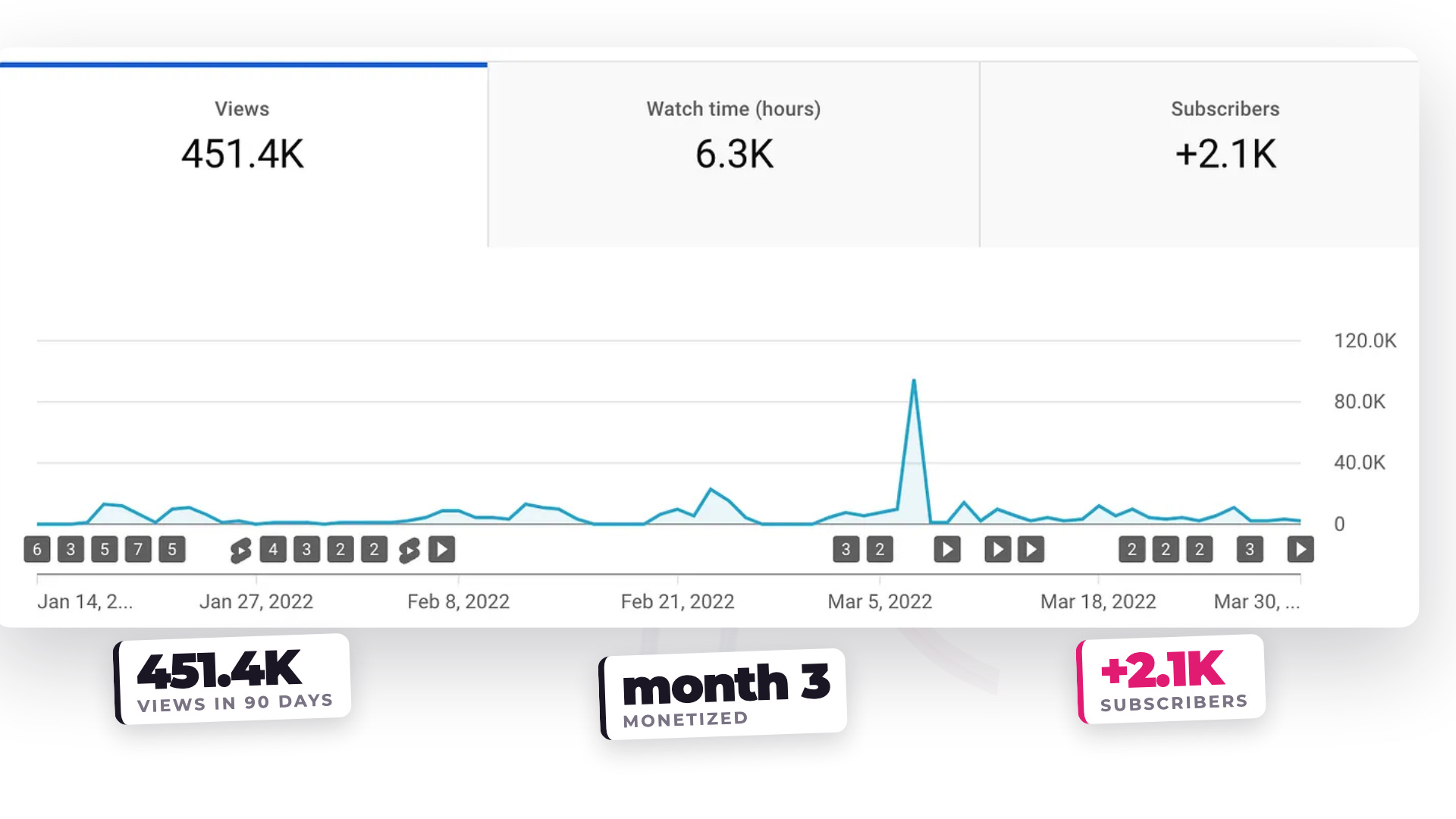
Look at the line. Flat, flat, flat, and then one day it goes vertical. 90,000 views in 24 hours.
Nothing went viral that day. No trend, no luck, no algorithm lottery. On that day I did one simple thing that every big channel does and almost nobody talks about.
I sent the video to an existing audience.
Not mine. I paid for it. I built mine later, and all of this happened in 2022.
But it's exactly why this matters now more than ever: YouTube does not show your new video to your subscribers anymore. Your subscribers are a suggestion.
The algorithm shows the video to a small sample, watches what they do, and decides. If the sample is cold, your video is dead by lunchtime.
Unless the sample isn't cold. Unless two thousand people who already trust you open the video in the first hour, because you asked them to. In their inbox.
That's the whole system. The rest of this post is the parts.
Why I do this
You know I run the Unplugged here on Substack: now with more than a thousand paid subscribers, more than 21k subscribers in total and a Top 20 Bestseller globally, built on the side of my full-time job in about two hours a day.
Now I decided to also run a faceless-ish YouTube channel.
It's called Algorithm Proof, it has no face in it on purpose, and it's an experiment I'm running in public: a brand-new channel I want to start from zero, which I’ll feed mostly by my Substack list. Until YouTube picks it up.
My goal is to test whether Substack can actually help grow your YouTube channel faster.
I also want to test this:
I designed an AI-automated system that delivers my videos in less than an hour, at a quality better than most of the agencies can deliver. At fraction of the cost.
And the best part: I could also record myself talking, upload the raw video to my AI system and get a polished version almost no agency can deliver at that speed and cost.
And yes, it’s me - my voice, my ideas, my script. Just automated. You know I aim for quality, and I think I’m finally onto something with videos.
So.
I'm giving you the entire system here.
Not a teaser, not "the first three steps and then buy my course".
The whole thing.
Because I'm tired of watching people sell a nine-hundred-dollar faceless YouTube academy to beginners who could have had it for free.
One more thing. I didn't guess that this works. I make data-driven decisions, not based on a hunch or emotions, and I studied the big channels for months before I built mine. Here's the pattern I found.
Peaks. Views peak, subscribers peak, every time a new video goes out. Not a slow climb. Steps. For months I wondered how they do that. I thought they paid for subscribers, you know, the illegal ones. But then how could almost every single one of them do that?
They had an external audience. An email list, to be exact.
That's why I built my list to more than 20,000 subscribers before I even thought of coming back to YouTube.
"But Yana, where do I get all these email subscribers?"
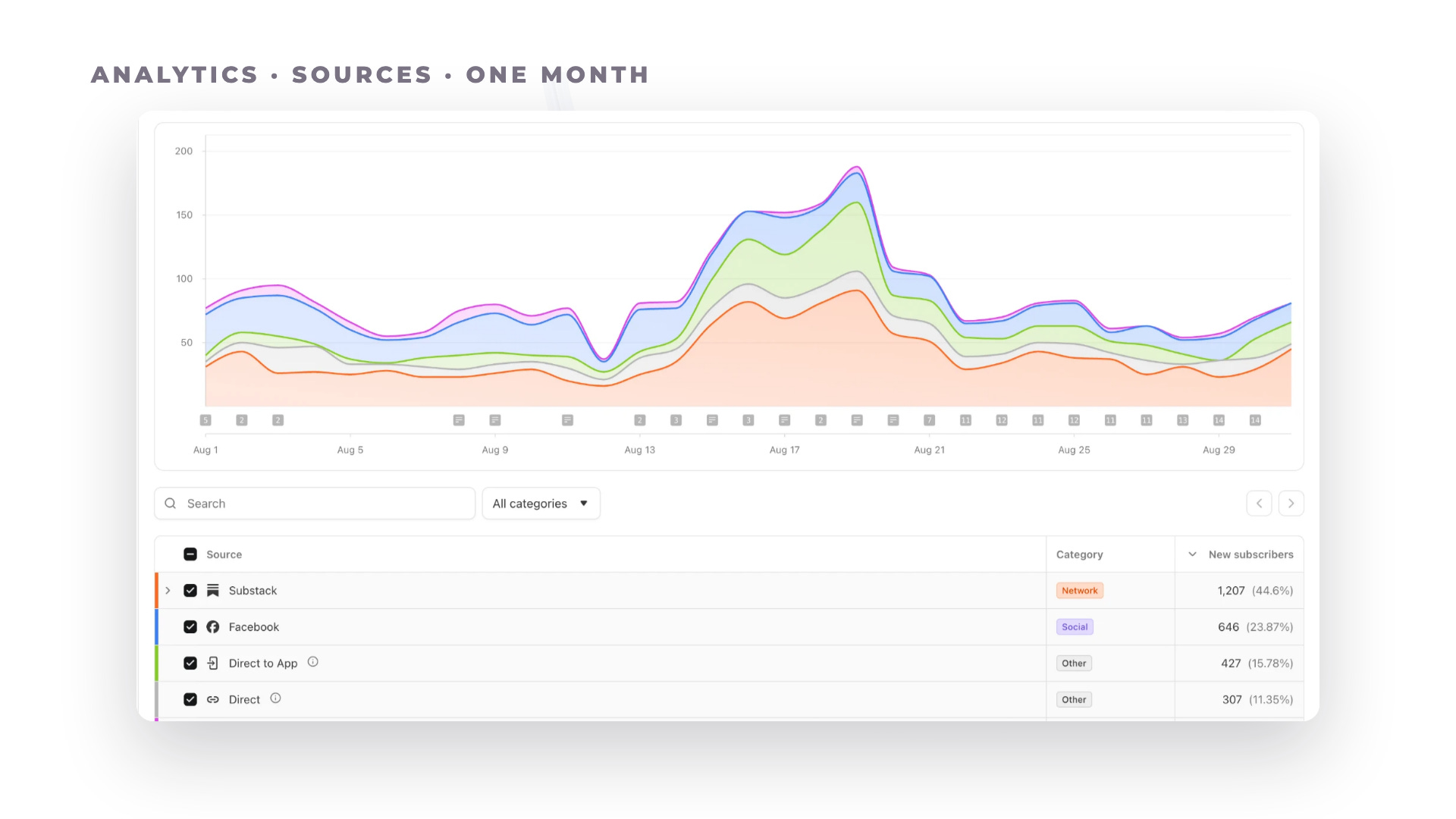
Short answer: Substack. It's a social network, but instead of followers you get subscribers. Hundreds a month, thousands when something goes viral. I now grow with more than 1,000 new email subscribers a month from Substack alone. See for yourself:
Part 1 · The flywheel: one link in one place
You start with the video. Not the article, the video. You publish it, and in the same week you turn it into a free article on Substack. Same idea, written for readers, with the video embedded and one link to it near the top. Just like this post.
Then you send that article to your email list.
Your subscribers get an email, they open the article, they click the video. YouTube gets two thousand people arriving from an external source in the first hour, and they watch, because they already trust you.
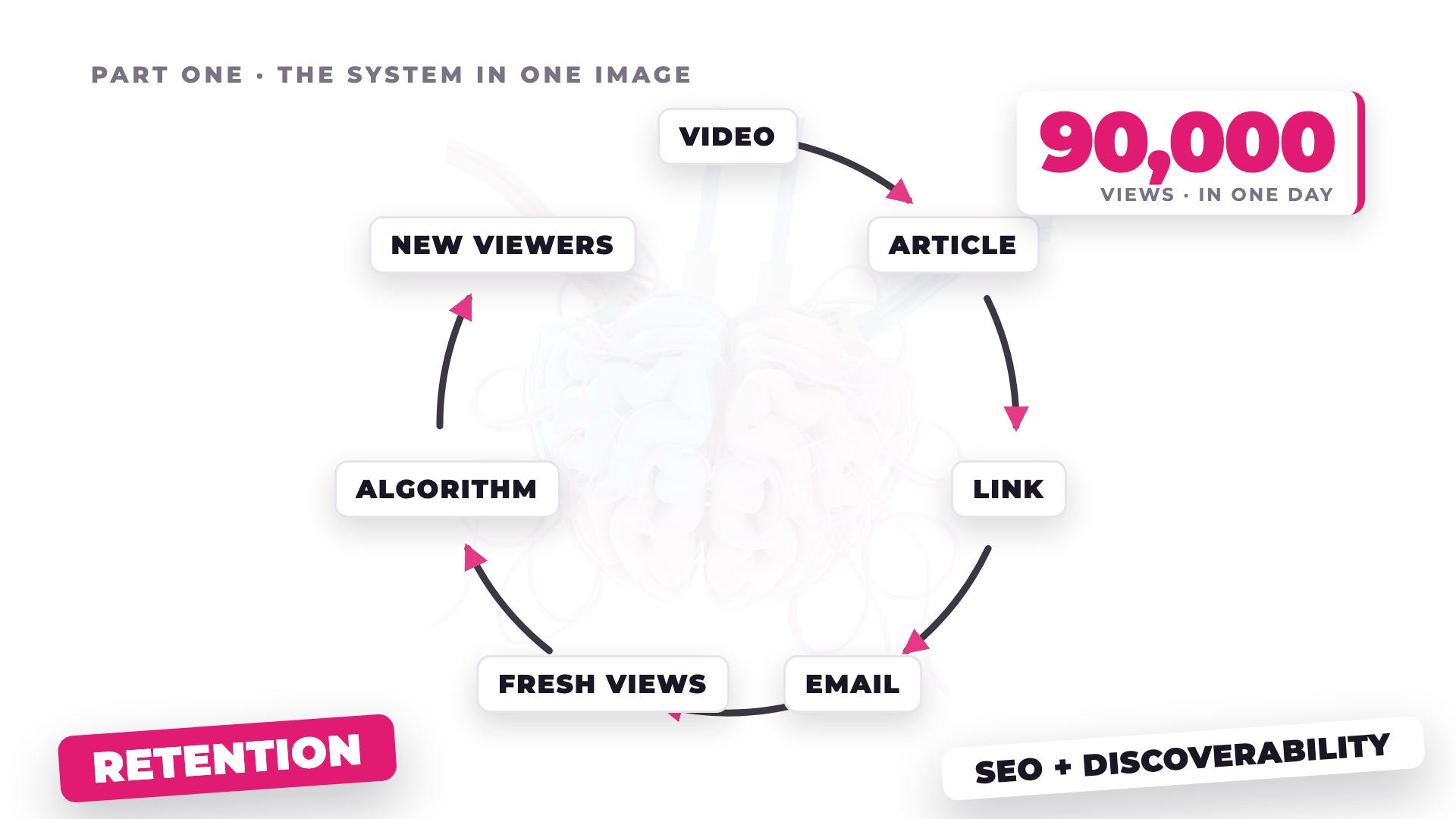
That is the spike from the opening. YouTube's algorithm doesn't know who you are. It only knows what the first hour looks like.
Now, let's be real about this. It's not a magic pill. When people from an external source came on purpose and stayed, YouTube won't necessarily push your video to strangers.
You have a higher chance.
And you get organic views that translate directly to revenue, provided the video is relevant to your audience and they care about the topic.
Because YouTube cares mostly about viewer retention, and that's exactly what a high-quality email list gives you.
And it doesn't stop there. The video helps your Substack too. Better SEO, better discoverability, and your list grows faster when you add high-quality videos to your posts.
That's what I call the Substack–YouTube flywheel. Every turn makes the next turn easier.
Faceless or not, by the way. You'll say faceless is bad, and you might be right, because people trust you more when they see your face.
This system works for any video strategy.
I choose faceless for three reasons: it's easier and fits my nine-to-five; my face is already in my newsletter, unpolished, and that's how I love to keep it; and most of it can be automated.
Actually, all of it can be automated. I'm just a control freak and I keep my manual checks before I publish anything.
So the system is simple:
You create the video and publish it.
You turn it into a free post on Substack.
You embed the video inside that post and hit publish.
Do this once a week. Measure after 3 months. I'll report everything on the channel and here.
The three mistakes
Most people who try this put the link in the wrong place: at the bottom of the email, after the article, as an afterthought. By then half the readers have left. The link goes near the top, before the article starts, with one line that says why to click now. (Scroll up. That's where mine is.)
The second mistake is publishing the article first and turning it into a video later. You miss the moment to send your subscribers to YouTube. Of course you can embed the video in the next article, but the topics won't match and the video becomes optional. The whole point is a video format of the same article, so people can watch or read.
The third mistake is creating for the sake of creating. Filler posts, filler videos, some people call it repurposing. People want quality now more than ever, because of AI. So I built mine differently: one free post a week that teaches how to use Substack the right way, using my QUEST framework. What I'm adding now is a YouTube video of it.
Part 2 · Why email is the asset
A follower is someone who gave a platform permission to show them your content, sometimes. That's also true for YouTube subscribers.
An email subscriber is someone who gave you their email address.
One of those you own. The other one is rented from an algorithm that changes its rules every quarter. My paid membership runs on my list. My launches run on it. My YouTube spikes will run on it. It's what I count on to make $20k a month and growing.
It's the only thing that can make a YouTube channel algorithm-proof (hence the name).
Why Substack, right now
One. On Substack you gain subscribers, not followers. The button next to every Note says Subscribe. One tap and they're on your list. On every other platform that's a three-step journey through a bio link, and you lose 90% of them on the way.
Two. Substack has a social network built in. Notes. It's the only platform where the social feed and the email list are the same product.
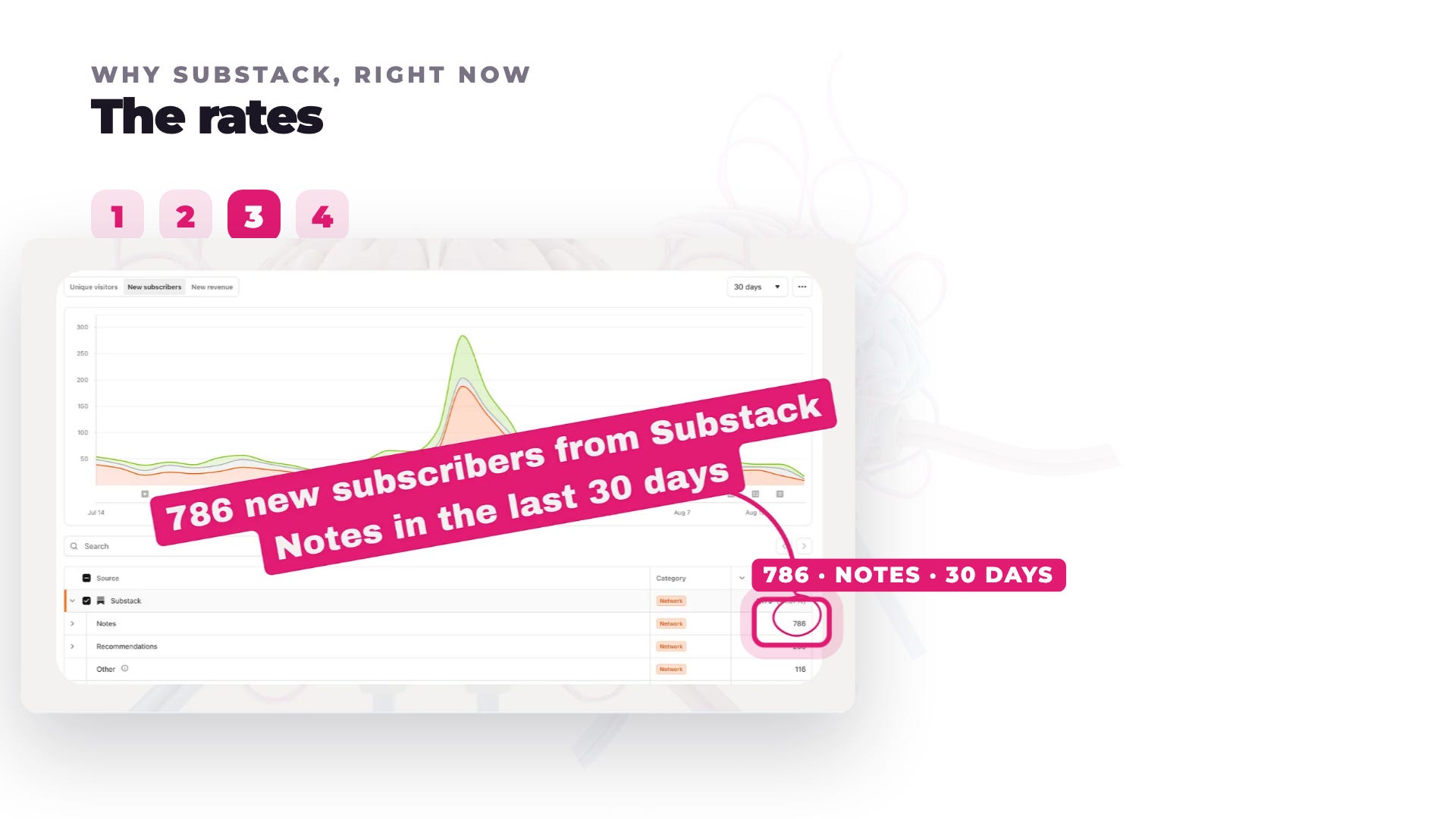
Three. The rates. In the last 30 days I got 786 subscribers from Notes alone. In 90 days, 5,918 from inside Substack. No ads in that number.
Four. You can be yourself. Nobody needs a ring light.
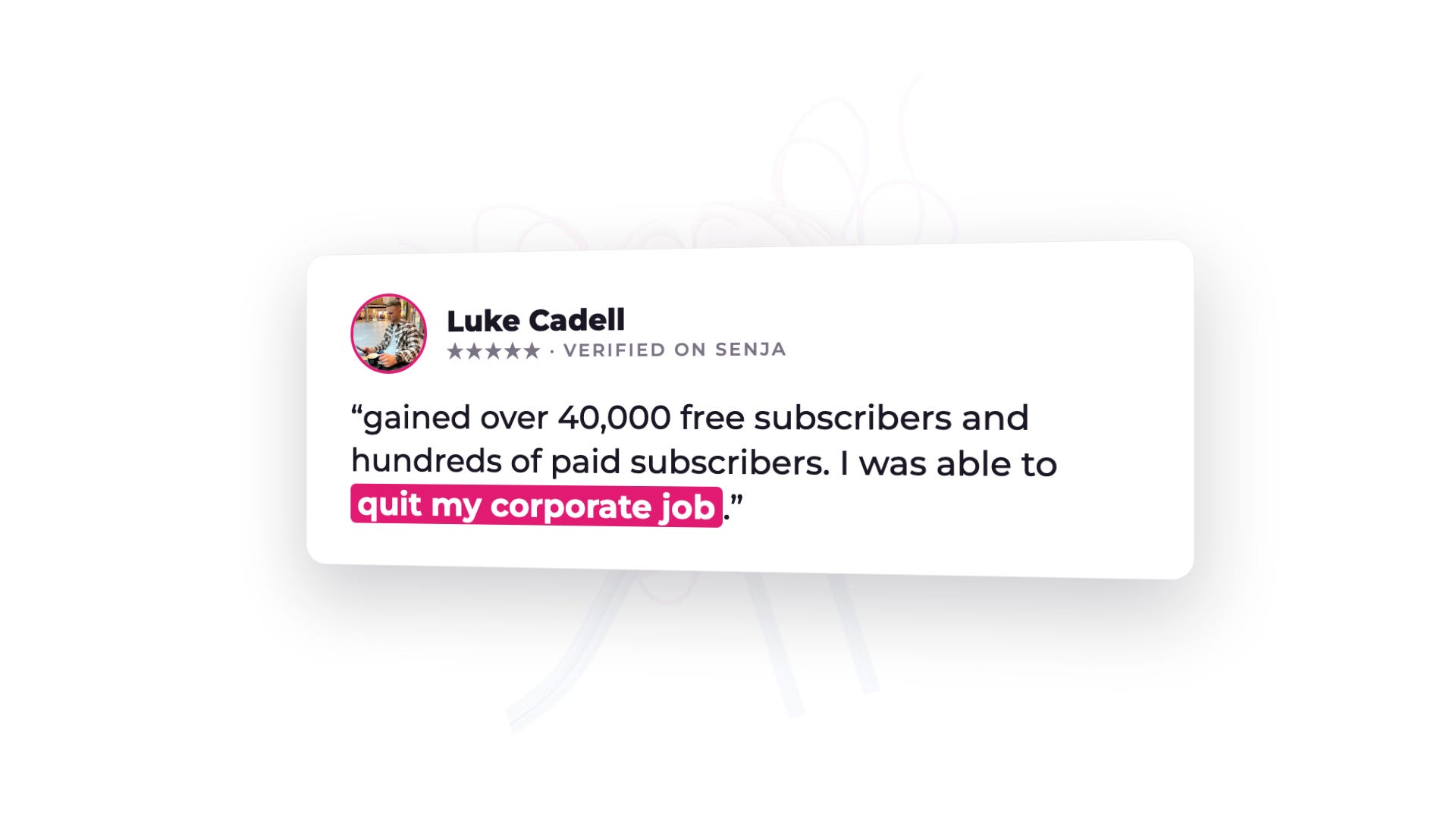
Luke runs a faceless newsletter. He used the growth strategies in part 4, went past 40,000 free subscribers and hundreds of paid, and left his corporate job. Those are his words, on my wall of love, with the date.
And no, not Skool. A lot of people are choosing it, and it has nice features, but the discoverability is the problem. People say they get new members from Skool recommending them. We're talking under ten a month. Substack brings you thousands of email subscribers a month, has automated sequences, boosts, recommendations, an MCP for AI workflows, and we can now even send livestreams from Substack straight to YouTube.
Which door are you?
If you’re a Substacker: every free article you’ve published is a video you haven’t made. Turn it into a video, like the one above, and you get a second source of traffic that doesn’t depend on Substack’s feed, and a second income from YouTube ads.
If you're a YouTuber: every video you've made is an article you haven't written and ten Notes you haven't posted. Turn the video into the article, send it, start a list that will carry your next video.
If you're starting from scratch: you're in the best position, because you get to build both in the right order from day one.
That's what the Algo Proof channel is for me. I'm doing it in public, every week, with the numbers on screen.
You'll say it's easier for me because I already have the audience.
But I'm confident I'd have grown much faster on Substack if I'd integrated a YouTube channel from day one.
Part 3 · How I do this (my SOP)
Everything in that video was made without a camera.
My voice is a clone of my real voice, trained on more than two hours of my recordings, reading a script I ideated and edited. Made in ElevenLabs.
The visuals are my real dashboard screenshost, animated. One person, no studio, no editor. Just me and my AI minions. Claude Code to be exact.
This is the part most "faceless channel" videos get wrong.
Faceless doesn't mean generic or AI slop.
The channels that die are the ones that look like everyone else's.
The channels that work have one thing nobody can copy: your real numbers, your real voice, your real system, your true identity.
The automation does the labor.
You supply the proof.
My seven steps:
The idea comes from data. vidIQ connected to Claude Code, plus the Substack MCP and some of the tools from Finn Tropy, to find topics my audience already asks for and outliers in my niche (a small channel getting ten times its usual views). If two channels did it in the last year, demand is proven.
The script is written with Claude, from my own content and my real data. Not the internet. Claude has my articles, my lives, my course transcripts. I give detailed input and I edit: 30 to 60 minutes, the same time I already spend on a weekly free post. Every number in it has to exist on a real screenshot from my business. That rule is my MOAT.
The voice. Claude Code is connected to my ElevenLabs account through the API and records the script with my professional voice clone, with emotional tags, so it sounds like me on a good day. That’s key. It’s how I make effects like clearing my throat.
The visuals. Screenshots of my real dashboards, my Senja testimonials, my numbers - all animated by a band template I built once with Claude Code. Same template, new numbers. For every video I have Claude Code check my data and extract the best examples.
Assembly. The push-ins, the counts, the reveals, music and sound effects. The template and Claude Code do it without me. Originally I thought I’d need Descript connected to Claude to edit my videos but I was impressed when I saw what kind of magic can Claude Code alone do to my raw videos. You can’t imagine!
Packaging. Then I have Claude Code package three thumbnails, three titles, description, tags, chapters, all scored in vidIQ before anything is uploaded. It also drafts my post on Substack directly, adds visuals and placeholders for me to edit, and creates the tangible asset for me. It’s just…AMAZING. If I would have to do this by myself it’s would take me a few days for the entire output - video + article + downloadable freebie. Or a couple of thousand dollars cost to an agency to do it for me (we pay more for less in my 9-5).
Edit, publish and send the article. Then I edit the article and the freebie (30 to 60 minutes, on the weekend), embed links, publish the videos, send the article, that’s it.
My TOTAL time per video: about two hours.
What it costs per month
Claude (Pro): $20 (the scripts, the research, the pipeline)
ElevenLabs (Creator): $22 (the voice clone)
vidIQ (Boost): $49 (the research and the scores, optional in month one)
YouTube, Substack: $0
About $90 a month, everything, one video a week.
Compare that to what a faceless-channel academy charges to tell you the same seven steps.
Or the cost of an agency or a freelancer or a VA.
Yes, it takes time to set it up, but you do it once.
Trust me, training a VA or briefing an agency would take you more to get to that level of quality.
Full disclosure: I'm on Claude Max because I run other automations with it. The lower tier is enough for this.
There's a one-time setup: a few hours to a day to build the production style with Claude and collect your brand assets in a folder.
Part 4 · Substack for growth (the fuel)
This is one of my free posts:
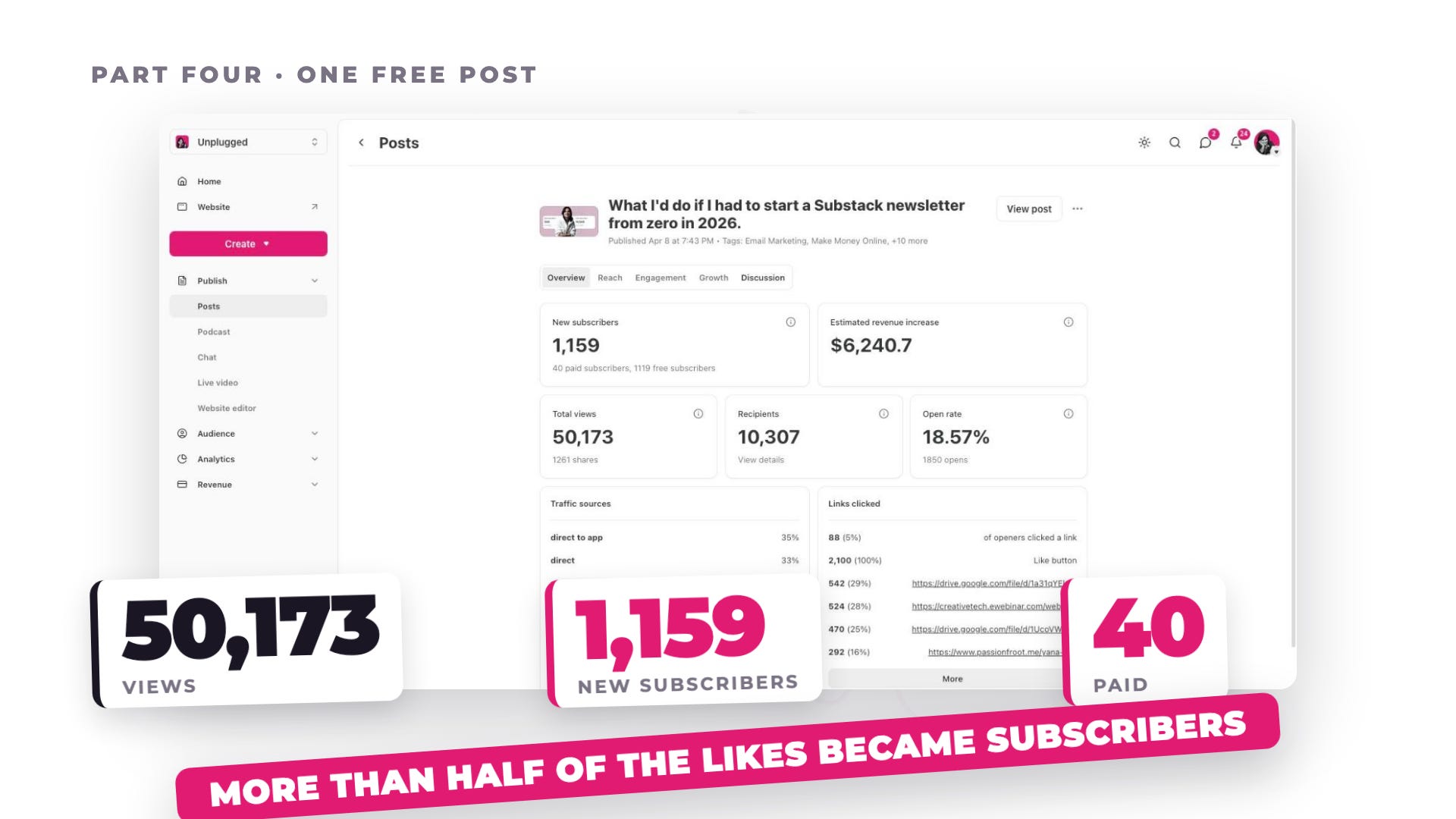
Fifty thousand views, 1,159 new subscribers, 40 of them paid. It only works because the publication behind it is set up to convert.
Turning a like into a free subscriber is a conversion. More than half of the likes on this post became subscribers.
Someone trusting you with their email is the first sale.
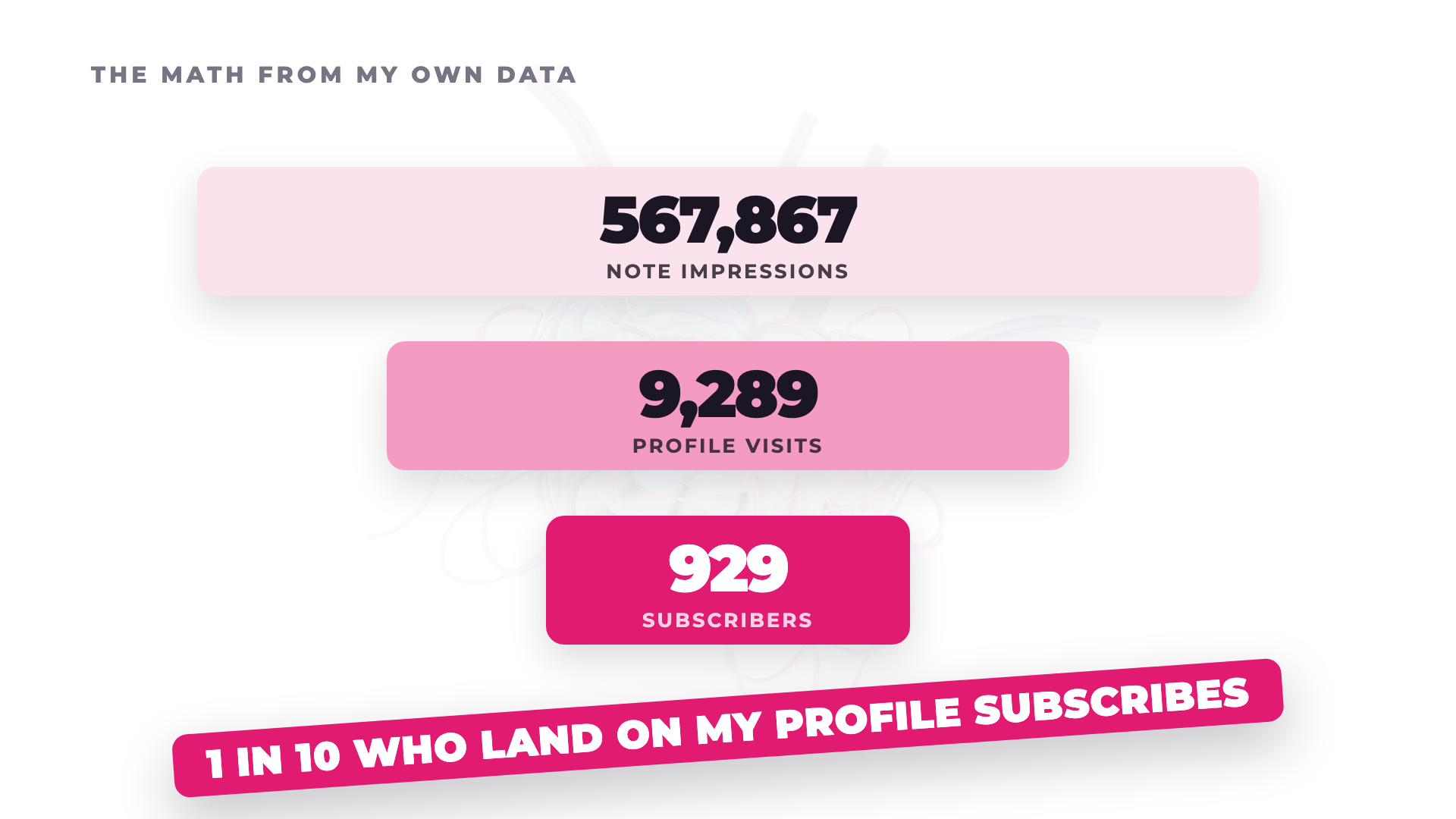
Here's the math from my own data: 567,867 Note impressions became 9,289 profile visits. Those became 929 subscribers.
One in ten people who land on my profile subscribes. That number is earned in five touch points, and you can fix all five in an afternoon.
Five things that matter the MOST:
The name of your Substack. Point it at the problem you solve. Say it out loud to three people who don't know you. If they can't guess what it's about, rename it.
Profile image, description, bio. They're a sales page, not an info panel. First sentence in second person. Your bio shows up in search, recommendations and the hover card on every Note.
The welcome page. The problem you solve, your solution, what's free and what's paid, the outcome.
The pinned post. Most writers pin a welcome note nobody reads twice. Mine is a "start here" built like a sales page, and it's the highest-converting post I have.
Consistency. The same words for your offer everywhere: profile, welcome page, welcome email, pinned post, email header and footer. Most people need three confirmation moments before they act.
I've mapped the setup in greater detail here:

The 5 Note templates
I analyzed 4,553 of my own Notes with Claude, and the first result was embarrassing. The correlation between likes and subscribers is 0.29. Restacks, 0.13. Thirteen of my 31 most-liked Notes brought zero subscribers.
My most viral Note ever, 10,000 likes, brought 164 subscribers and zero paid.
The second result is the one that matters most: 210 quiet Notes brought one or two subscribers each. That middle is the actual engine, because you can repeat it.
Claude read all of them and found five shapes, and some of those convert likes to subscribers at above 40%:
The build-in-public number drop. "$5,512 a month from 393 people. Eight hours a week. Still have my nine-to-five, because I love it."
The "what actually drove it" list. "The top three features that drove me 51 paid subs: a good welcome page, an AI tool, an engaged community."
The turning-point micro-story. "September '24, I had 20 paid subscribers. I rewrote my offer in one sentence. Today? 465."
The honest confession plus a question. Replies predict subscribers twice as well as likes. The "drop your link below" threads get replies too, and those subscribers never convert. I ran 34 of them. I stopped.
The belief and its consequence. "'I give so much for free, I can't charge now.' You trained your readers to value free. Stop it."
Three rules around them:
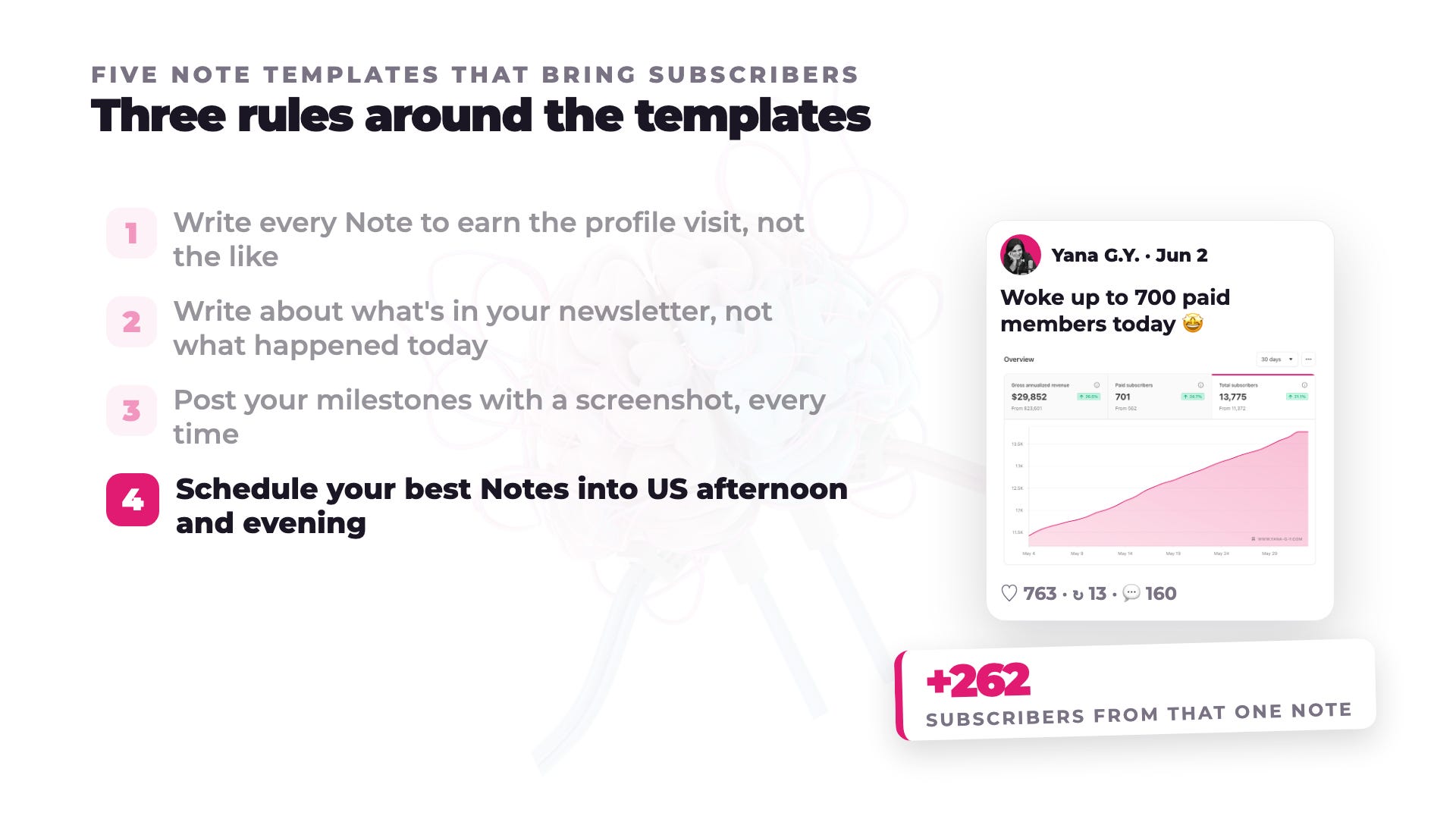
Write every Note to earn the profile visit, not the like.
Write about what's in your newsletter, not what happened today.
Post your milestones with a screenshot every single time. My "700 paid members" Note brought 262 subscribers.
The full analysis, with all the rules, the exact templates are here (free):

My 30-minute engagement routine
A paid member showed me this on a screen share. One Note, 138 likes, zero subscribers. Another, four likes, one subscriber. Likes and subscribers are two different games.
His growth was stalled at 200. Twice a week, good posts, nobody new saw them. Visibility was the problem, and there's one reliable fix for visibility: engagement. Honestly, I hate it. But if there's ONE place where it's worth the time, it's Substack, because it brings you emails on your list.
Five blocks, every day, 30 minutes:
15 min. Comment on the 10 to 15 writers in your niche. Substack tells you who they are: Dashboard › Stats › Audience, scroll to the bottom. One or two sentences with your own angle. "Great post" does nothing.
10 min. Search the question your ideal subscriber asks and your top free post answers. Sort by recent, answer four or five real people properly, then the link. I had one such answer go viral and bring hundreds of subscribers.
5 min. Restack three to six Notes with a sentence of your own. Blank restacks are invisible.
5 min. Answer every comment on your own content.
5 min. Show up in the pinned chats of bigger newsletters in your niche, with answers, not links.
Four to six weeks before the chart bends. Weeks one and two feel like shouting into a void. That's the tax. 783 subscribers in 30 days from Substack alone is what the tax paid me.
The printable SOP and the daily checklist are in the Write2Sell:

The free post that grows your list for months
Back to that 10,000-word post. Here's the part nobody tells you: it flopped for the first week. I made it work.
Before you write, the six-question test. Does it answer the most-asked question in your niche so completely nobody needs a second source? Does it include at least one thing you'd rather not admit? Can you cut three standalone assets out of it? Would you send it to a friend without apologizing for the length? Does it carry a real milestone as proof? Would you save it to read later? Four yeses, publish. Two, rewrite.
How to write it. Go long. A 10,000-word post is also a Note, a chat thread, a freebie and a video. Leave the pain in: posts that only show the good parts get read once, posts that name the disappointment get saved. Wait for a milestone and put it in the title. Lock two assets behind a free subscription with audience-specific content. (That's what the block you just passed is.)
After you publish, the surfaces you own. Pin it on your homepage and in the navigation as a free course. Put it in the welcome email. Post the assets in your chat as downloads. Cut the five sharpest paragraphs into Notes across two weeks. Make one asset a free download elsewhere. And my favorite: turn it into a video, publish the video a few days before the article, and put the link near the top.
The surfaces you borrow. Answer people already asking in Notes search, four paragraphs of help first, the link last. One short line on viral Notes in your niche. Ask five collaborators for a restack. Show up in bigger chats with answers.
The amplifier. When the post gives you a milestone, post it as a Note with the screenshot and answer every comment. Mine added 263 subscribers.
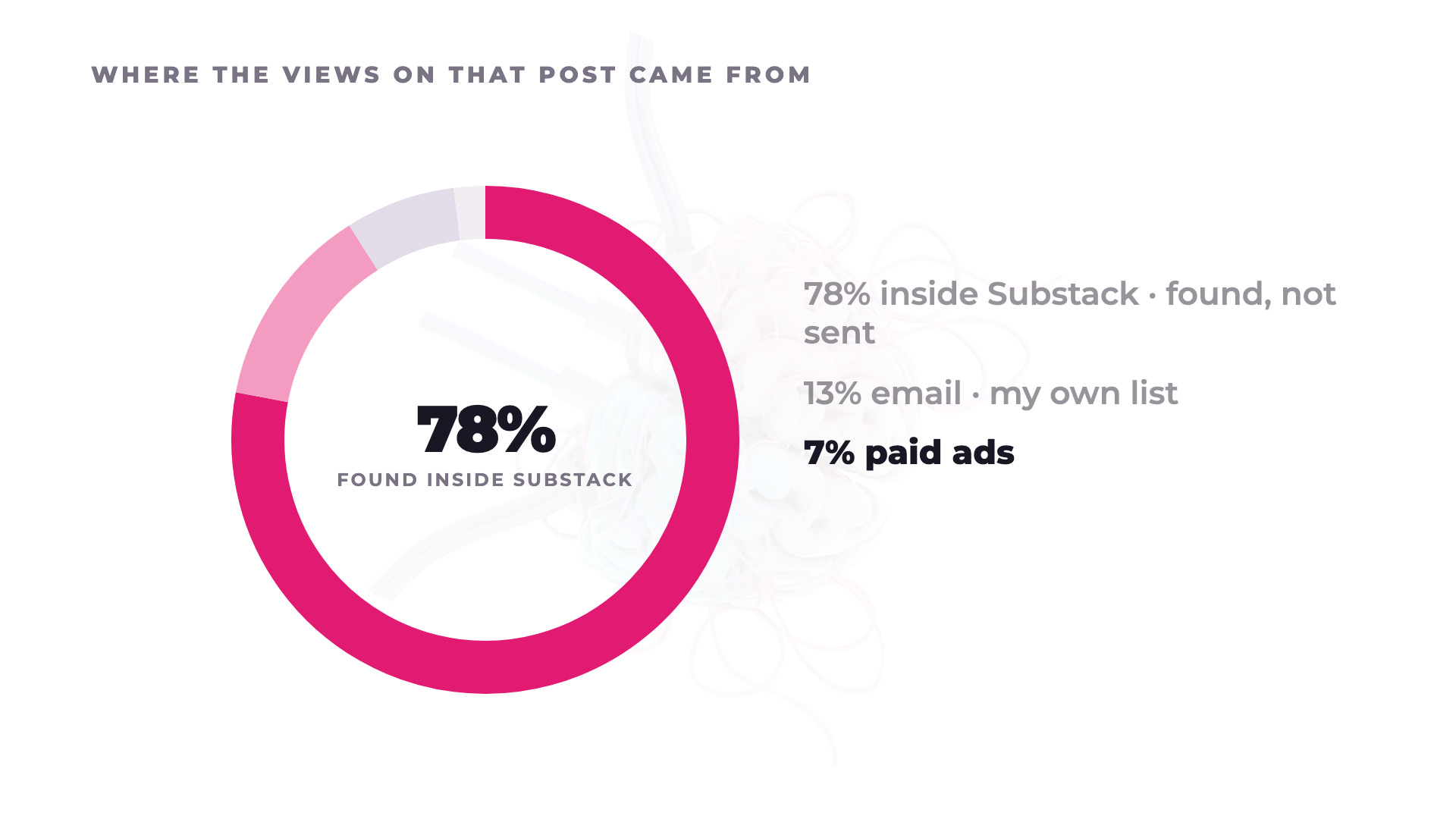
78% of the views on that post came from inside Substack. Found, not sent. The writing is 30% of the job. The placing is the other 70, and it's the 70 nobody wants to do.
And her’s my exact distribution SOP with the checklist:

Now YouTube
Create one super long video, an hour if you can, and pin it on the home tab. That's your growth video. The one above is mine.
Then let every new video link to it on the end screen and in the first link of the description.
Why?
Because YouTube optimizes for retention on the platform: every video has to be engaging and long enough, 8 minutes minimum (for ads monetization).
It also hates when viewers leave the platform, so every video leads to another YouTube video, not to Substack. Your Substack link goes in the channel description and that's it.
I treat YouTube like a blog, so I optimize for SEO in the same way: add links to other videos, have pillar videos, create a binge effect.
For viewer retention in the production itself: moving elements, a scene stays a few seconds, music, dopamine kicks all the way through, a shocking moment in the opening, and tell them what they get at the end.
That's also why I won't do talking-head videos on that channel (for now). They're plain boring and almost never go viral unless you’re huge or a celebrity. I’m not, and I have a nine-to-five. So I keep my processes efficient.
Schedule: one video a week.
Shorts? I’ll skip them for now. I see faceless channels grow better without shorts, so I’m testing this strategy.
Part 5 · The experiment
Watch what happens to that video.
It went live a few days before this post. And I already have a signal it might work:

So, whatever it does over the next month, you'll see it on the channel and here with my regular reports and analyses about results (monthly) - with all the traffic-source chart, good or bad.
That's what the channel is: a brand-new channel, zero subscribers on day one, fed only by a list I own.
My goal? Monetize it in 3 months or less.
Honestly, not sure if this will work, but I want to try anyway.
In a nutshell
This strategy is simple: one video, one article, every week. I already post free content, the video is an easy add using my Claude setup.
And I have to be honest - it took me quite a while to do that setup and I did invest close to $5k in tokens to do it.
But I love the result.
It’s good quality, it’s scalable and it’s cheap. Plus: I can always start filming myself and adding myself into this video format using the same Claude setup at no extra cost other than my filming time.
The big channels do this quietly. Now you know how.
Start with the video you already have, or the article you already wrote.
Turn it into the other one.
Send it. Then come back next week, see the results, adapt and continue.
I'll be doing exactly this, in public, with the numbers.
And I can’t wait to see how it goes.
Yana
P.S. If you want my help setting up Claude to produce that kind of video quality from your Substack articles, this is where we start.
👉 Start a discussion in the Unplugged community! Get help or simply introduce yourself and connect with like-minded members, and create meaningful connections.
Kickstart Your Substack Growth:
Get a FREE 10-Day Substack crash course to grow your first 1000 subscribers
Join my FREE Masterclass on how to start making consistent $5,000/month
Join the One and Only Substack Quest to build a high-converting Substack
Work with me to get your Substack up and growing
Save Tons of Time! Use My AI Skills and Tools:
The Title Generator that gives me headlines that stop the scroll
The Notes Writer that writes Viral Notes, bringing my paid members and me hundreds of subs
The Writer Pro that turns my Notes into >90% human drafts.
And so much more….Get them all from the Unplugged Toolbox
Join my YouTube Channels:
The conversations with other Substackers about Substack growth & more
The psychology of how I build a six-figure business on the side of a 9-5
Become an Affiliate:
Earn 30% from each sale. Apply below, I approve everyone.
Apply here for my AI tools & templates
Apply here for the SUBSTACK QUEST courses
Become a sponsor:
Reach thousands of engaged buyers.
More from me:
Unplugged: The place to be if you want to grow an AI-powered paid newsletter and create content that sells itself.
My Curated Collection of Books that changed how I think and shaped who I am
A million thanks for this! I’ve been wondering what’s the best strategy to do this.