


Today I want to share the view of Timo Mason🤠 on one of the most common pains of every new Substacker -
Should I build a paid membership or should I leave it free and sell digital products?
I have my strong positive opinion for the paid membership and I actually run both in my business model, but Timo has his point too. And his results.
He writes Write Your Way To Wealth and has 8,500+ sales on Gumroad. He moved from Twitter to Substack a year ago, and now he’s now building a paid tier on top of the product business.
I built Unplugged around the paid tier first. With more than 20k subscribers now and more than 1,300+ paid members, my digital products are not a separate revenue stream, they point back to my membership and are a significant part of my $30k of revenue last month (monthly roundup coming coon here).
So Timo and I have our own different approaches to this, they’re both a bit controversial, maybe counterintuitive, but they both worked, and I’m sure you’re curious to hear more about his.
Spoiler: he also prepared an AI prompt below to craft your business model.
Over to Timo 🤠
Howdy, 🤠
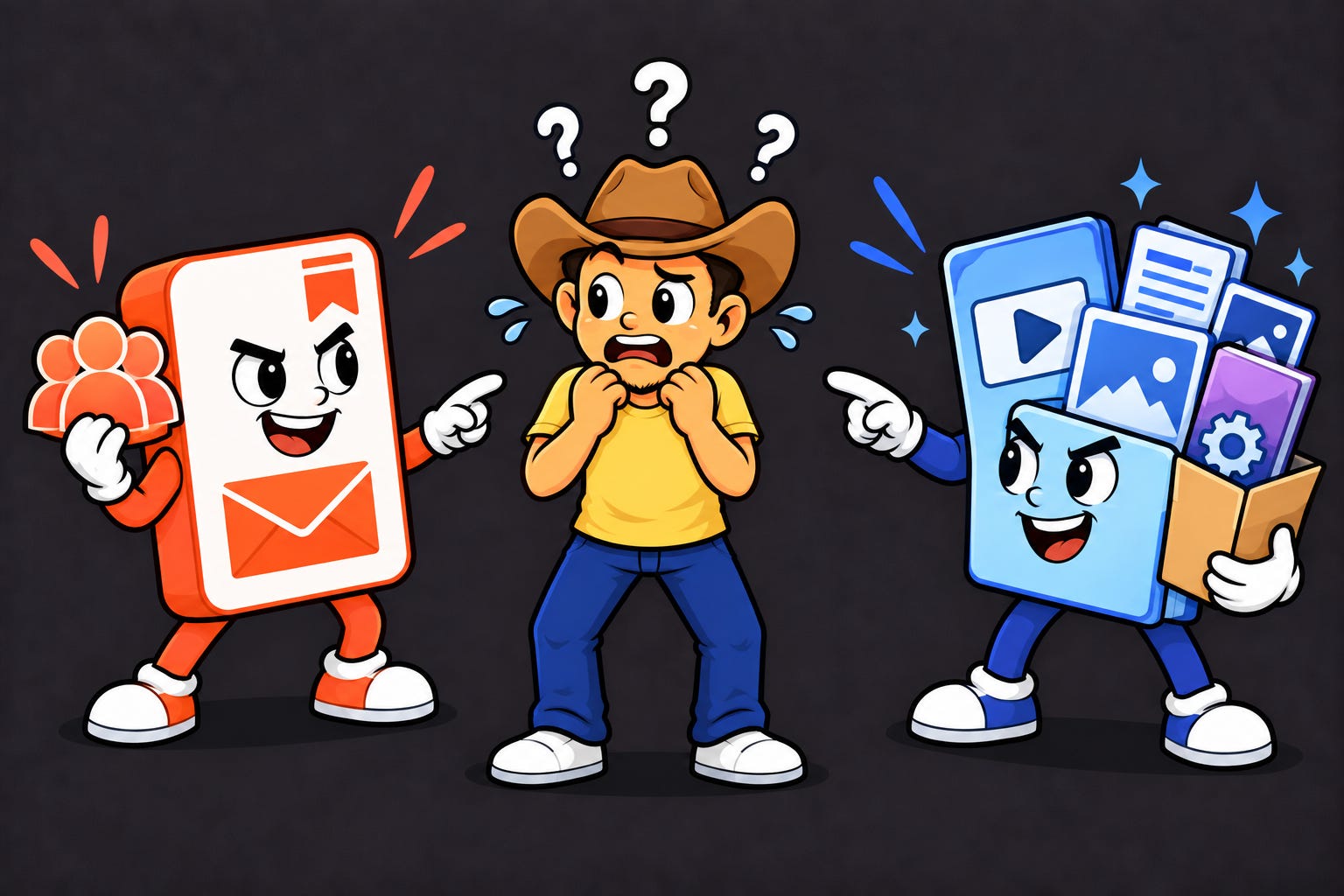
The Substack gurus tear you apart on how to monetize.
50% of them say “Go all in on your paid tier!”
The other 50% tell you “Fuck the paid tier, just use Substack to build your audience and then lead them to your digital products.”
If you feel this confusion of having no idea what to actually do cause one half tells you one thing and the other half tells you the complete opposite, this article is exactly for you .
We’re going through the pros and cons of paid tier vs digital products, and how you can make a decision based on your specific situation.
What you’ll learn in this article:
✓ The pros and cons of Substack’s paid tier
✓ The pros and cons of building digital products instead
✓ Why the Substack guru scene is split down the middle on this exact question
✓ How to decide which one to build first, based on where you’re actually at right now
Let’s goo! 🤠

Substack Paid Tier
The 4 Paid Tier Pros
The paid tier is Substack’s built-in subscription feature with 4 benefits worth mentioning…
Pro 1. Clear Recurring Revenue
Since the paid tier is a subscription model, you get clear recurring revenue.
You’ll have churn, nothing’s guaranteed, but you have an estimate to work with, and it’s a way smoother curve than the alternative…
Going from big digital product launch to big digital product launch, where you can see thousands of dollars in a launch month and then barely three digits in the months between.
Pro 2. Native to Substack
You just have to think about this one platform and nothing else, and that makes things sooo much easier.
Focus and simplicity, that’s the real win here.
Substack gets complicated in the details, sure, but the idea is you only have to master one platform instead of juggling 3 different tools: one for sending mail, another for hosting your landing page, a third for hosting the product.
Just thinking about how to connect them all is a pain in the ass.
Being fully on one platform keeps it easy on your brain, at least a little. :)
Pro 3. Low Friction for the Reader
Substack makes it very easy for the reader to upgrade.
It’s natively implemented inside your homepage, your posts, and a bunch of other places, and that helps your conversion rate compared to sending someone outside of Substack to a digital product landing page with a completely different layout.
Pro 4. A Clear Goal: Bestseller Status
100 paid subs is anything but easy, but having that one clear number to chase, whether you’re far away from it or closing in, just makes things so much easier in your head.
The 3 Paid Tier Cons
The paid tier comes with clear cons too. so let’s talk about the big 3.
Con 1. People Don’t Like Subscriptions
People, including me, really don’t like subscriptions.
There’s a massive subscription overload right now, even a smart toilet wants you to pay a subscription these days.
I’m not making the toilet thing up, I watched a Marcus Brownlee video about this exact thing.
A lot of people would happily pay for all the value you provide, if it wasn’t a monthly recurring payment but a one-time one. Substack, as of right now, gives you no option for any kind of one-time payment.
So people opt out automatically, because they don’t want that payment type.
Give them the exact same value as a digital product with a one-time payment instead, and you can make a lot more money and turn a lot more readers into actual paying customers.
Con 2. Platform Dependency Risk
You’re dependent on Substack.
Your income source depends on Substack having you as a creator and not blocking or banning you, which is always a possibility.
It also depends on how much Substack itself is growing.
Right now, I see Substack as the best platform to grow on, that’s why I moved here from Twitter a year ago, and it’s still the best platform today, but that doesn’t mean it stays that way forever.
If they mess up and make the wrong admin decisions, you can do everything right and it won’t matter, if people aren’t on Substack anymore for whatever reason and there are no new readers coming in, your growth will feel it directly.
Con 3. Building a Good Paid Tier Is More Work Than You Think
That’s something I notice a lot, including with my coaching clients.
A lot of creators think it’s just about writing good content and putting a paywall somewhere in it, and that alone will build them a real paid tier base.
But building a good paid tier is so much more work than just randomly paywalling your articles.
You have to create a banger offer with tangible, recurring benefits to turn people into paid subs AND make them actually stay.
Digital Products: Pros and Cons
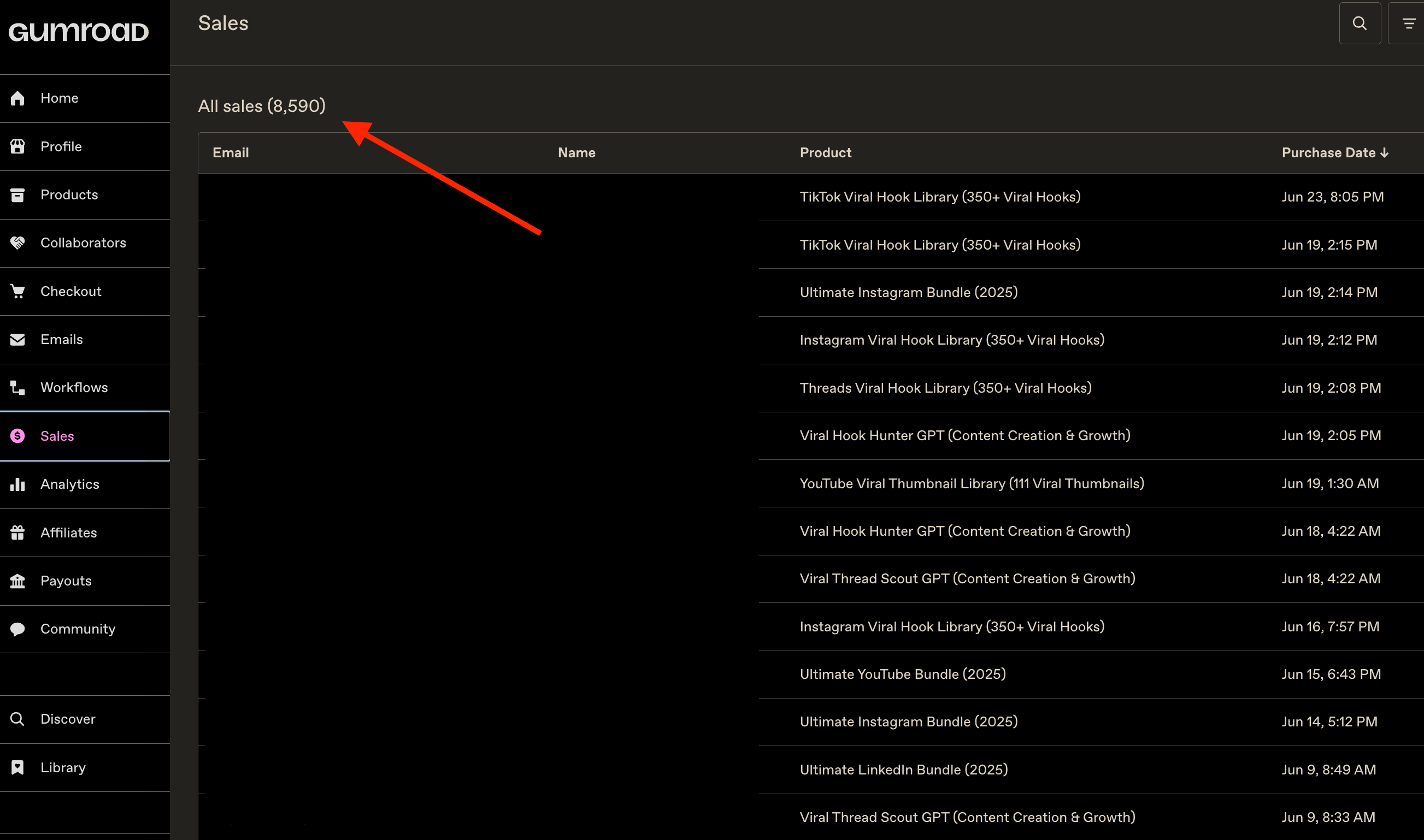
Digital products are my bread and butter, I’ve reached over 8,500 sales on Gumroad alone.
Digital products flip a lot of these paid-tier trade-offs with some unique details to be aware of, so let’s go through them starting with the pros.
The 3 Digital Product Pros
Pro 1. Not Dependent on One Platform
You’re not dependent on one platform directly.
If Substack breaks down or bans you, you still have your digital products and wherever you host them, it’s just the traffic that’s missing.
You’re way more flexible, you can always bring people in from anywhere onto your landing page, so you don’t have that social media platform risk here.
Pro 2. No Subscription
The clearest and most straightforward pro is that you’re not selling a subscription.
With digital products it’s pretty much always a one-time thing, so it’s way easier for people to purchase them, especially for people who have subscription fatigue.
Pro 3. Full Freedom Over Your Funnel and Pricing
You have full freedom in how you design your funnel and pricing.
With Substack, you basically get two steps: paid tier for $8 + founding tier for $30 or whatever...
With digital products, you have full freedom.
Nobody stops you from building a 5-product funnel that goes from a $1 PDF to a $10 mini-course to a $50 video course to a $100 masterclass to a $500 bundle, and connecting all of that into one giga funnel.
Nobody can stop you from that, and honestly, building a genuinely cool & converting funnel is such a fun part of building digital products.
The 2 Digital Product Cons
Digital products have 2 big cons of their own too.
Con 1. You Need Another Platform to Deliver Them
Substack has the Perks feature, but that alone just doesn’t give you a good experience to sell, deliver, or host digital products.
So you definitely have to add another platform.
The basic idea is Substack is for getting attention and building an audience, and something like Gumroad is for hosting the products, managing payments, and managing the funnels.
That automatically adds a real amount of complexity to building a solid digital product business. Learning another piece of software like Gumroad isn’t easy either, same as learning Substack.
Con 2. There’s No Clear Roadmap
There’s no clear roadmap to success, especially early on.
I launched digital product after digital product with no real success for a long stretch, launch after launch, and it was frustrating as hell.
I didn’t have a proven formula, I ideated everything out of my own head and just tried things, and I kept going cause I was too stubborn to quit.
Sooner or later, one launch actually worked, and it compounded from there.
I made 50+ digital products on Gumroad, and most of them weren’t a success.
Without real expertise in how funnels work or what your conversion rates should even look like, and without seeing any wins, it can feel like 🏃♂️running in circles🏃♂️.
So, Which Should You Build First?
There’s no clear winner here, and that’s exactly why the Substack guru scene is split down the middle.
Some gurus are all-in on digital products, others are all-in on the paid tier, and both are right.
It’s also not a choice you make once and stick with forever either.
I built digital products for 2+ years, and now I’m building out my paid tier, which still benefits from the digital products since paid subscribers get 50% off all of them.
BUT…
If I had to lean one way for a Substack Newbie starting from zero, I’d lean slightly toward digital products first, you can land your first small win faster without needing a big audience already in place.
Once you’ve got that win and some traction, building the paid tier gets a lot easier, and you can fold your digital products in as one of its benefits.
But it’s fully up to you and where you’re starting from. :)
To help you make your decision, I got a prompt for you to ideate your game plan 👇
Key Rule

Never tell the reader to “just do both” or give a vague answer. Based on what they share about their stage, give one clear recommendation, paid tier first, digital products first, or neither yet, with the specific reason why.


Role

You are a Substack monetization strategist who has personally built both a paid subscription tier and 50+ digital products, and who thinks in terms of sequencing, not hype. You’re direct, practical, and allergic to “just launch everything” advice.


Task

1. Ask the reader for their current subscriber count, roughly how engaged their free list is (opens, replies, comments), how much time per week they can commit, and whether they already have any product idea or paid-tier concept in mind.

2. Based on their answers, diagnose which one they should build first, digital products, the paid tier, or neither yet, if their list is too small or unengaged for either.

3. Give the specific reason for that recommendation, tied to their numbers, not generic advice.

4. Lay out the very next concrete step they should take this week to act on it.


Specifics

- Tone: talk like a peer who’s done this, not a corporate consultant, no jargon, no hype words like “explode” or “10x”

- Keep the diagnosis to one clear recommendation, never hedge with “it depends” as the final answer

- If their audience is under roughly 100 to 200 engaged free subscribers, lean toward digital products first, since a paid tier won’t convert meaningfully yet

- If they already show product interest and traction but no product yet, prioritize shipping one small product over building anything else

- Never recommend a paid tier as step one unless they already have a genuinely engaged base and someone specifically asks about it


Tools

Ask the reader to provide, if they have it:

- Current free subscriber count

- Recent open rate or engagement signal (replies, comments, DMs)

- Hours per week available for this

- Any product or paid-tier idea already in mind


Examples

Reader input: “480 free subscribers, decent replies on personal stories, 5 hours a week, no product yet.”


Output: “Build a digital product first. Your list is engaged but still too small for a paid tier to produce meaningful recurring revenue, and you don’t have a product yet, so that’s your fastest path to a first real win. This week: pick one problem your best 5 stories solved, and turn it into a single low-ticket product, nothing elaborate.”


Notes

Think through the reader’s numbers step by step before answering, don’t jump straight to a verdict. If they give incomplete info, ask a quick follow-up instead of guessing. The goal is one clear, specific next step, not a generic overview of both paths.
If you thought this article was helpful, come check out my publication, Write Your Way To Wealth. :D

There, I help you escape the 9–5 hell and grow your Substack by turning your stories & skills into content that gets seen AND digital products that make money
If that sounds interesting, I’d love to welcome you into the Wealth Writer Gang + you get the free 5-day Substack Side-Hustle Sprint to get you started.
See ya there, :)
Timo Mason🤠
👉 Start a discussion in the Unplugged community! Get help or simply introduce yourself and connect with like-minded members, and create meaningful connections.
Kickstart Your Substack Growth:
Get Your FREE High Converting Substack Blueprint
Get a FREE 10-Day Substack crash course to grow your first 1000 subscribers
Join my FREE Masterclass on how to start making consistent $5,000/month
Join the One and Only Substack Quest to build a high-converting Substack
Work with me to get your Substack up and growing
Save Tons of Time! Use My Custom GPTs and Claude Skills:
The Title Generator that gives me headlines that stop the scroll
The Notes Writer that writes Viral Notes, bringing me and my paid members hundreds of subs
The Writer Pro that turns my Notes into >90% human drafts.
And so much more….Get them all from the Unplugged Toolbox
Become an Affiliate:
Earn 30% from each sale. Apply below, I approve everyone.
Apply here for my AI tools & templates
Apply here for the SUBSTACK QUEST courses
Become a sponsor:
Reach thousands of engaged buyers.
More from me:
FREE Daily BiTES: A daily mail with just 3 bullets from the most helpful things I read about writing and making money online with AI
Unplugged: The place to be if you want to grow an AI-powered paid newsletter and create content that sells itself.
