


People love to romanticize $10k months.
They turn it into a fantasy, a milestone wrapped as a gift and “someday energy.” They talk about it like it’s magic. Like it falls out of the sky when the algorithm finally decides to bless you. Like it’s reserved for the lucky, the chosen, or the unusually gifted.
I used to think that way too.
Before I built a business.
Before I tracked the numbers.
Before I spent fifteen years watching subscription revenue move exactly the way water moves: slowly, stubbornly, then suddenly all at once.
And before I made my first $10k in a month.
Here’s what I know now, and what most people avoid because it kills the fantasy:
It’s not luck.
It’s not virality.
It’s not the talent you were born with or the muse whispering in your ear.
It’s math.
It’s structure.
It’s economics applied to your creativity.
But above all, it’s persistence — the kind most people never develop because they misinterpret silence as failure and normal plateaus as proof that “it’s not working.” So they quit.
Momentum is invisible before it’s obvious
The journey to $10k months doesn’t look like people expect. It’s not a staircase. It’s not linear. And it’s not easy.
You spend months building without feedback.
You publish when no one comments.
You send emails that feel like they disappear into the void.
You improve things no one sees.
And during these quiet months, you start thinking maybe you’re wrong. Maybe it won’t work. Maybe it’s not for you. Maybe you’re wasting your time. Maybe the “lucky ones” know something you don’t.
This is where most people quit.
They stop three feet before the gold.
They quit right before the compounding happens.
Right before the referrals start.
Right before their ecosystem clicks together.
Right before the thing they built finally has enough structure for revenue to accumulate.
They just don’t see it (to believe it).
I didn’t quit.
I trusted the process.
I’m not stronger or braver or more disciplined.
I’ve just been doing this professionally for more than 15 years.
So I knew. Even though I wasn’t seeing it yet.
I’ve seen how revenue behaves. I’ve scaled products from zero to millions. I know that the work you do today almost never shows up tomorrow — it shows up months later.
So I stayed on track.
I built the right things.
I trusted the math more than the mood.
That’s how I got to $5K/month consistently.
And that’s how in October, with just 6,000 subscribers, I passed $10K.
My $10K/month formula (the real one)
Here’s the version you can use right now.
It’s simple, but it’s not easy — because it requires decisions, clarity, and courage.
1. A clear paid tier for your newsletter
This is where most people underbuild.
They create a paid tier that feels like a “nice-to-have” instead of a necessity. They sell access, archives, chats and comments. Things people could buy if they feel generous, not something that feels essential to their growth.
I sell clear solutions to painful and urgent problems.
Your paid tier must be useful, tangible, and designed so well that not upgrading feels like missing out on the next phase of their progress.
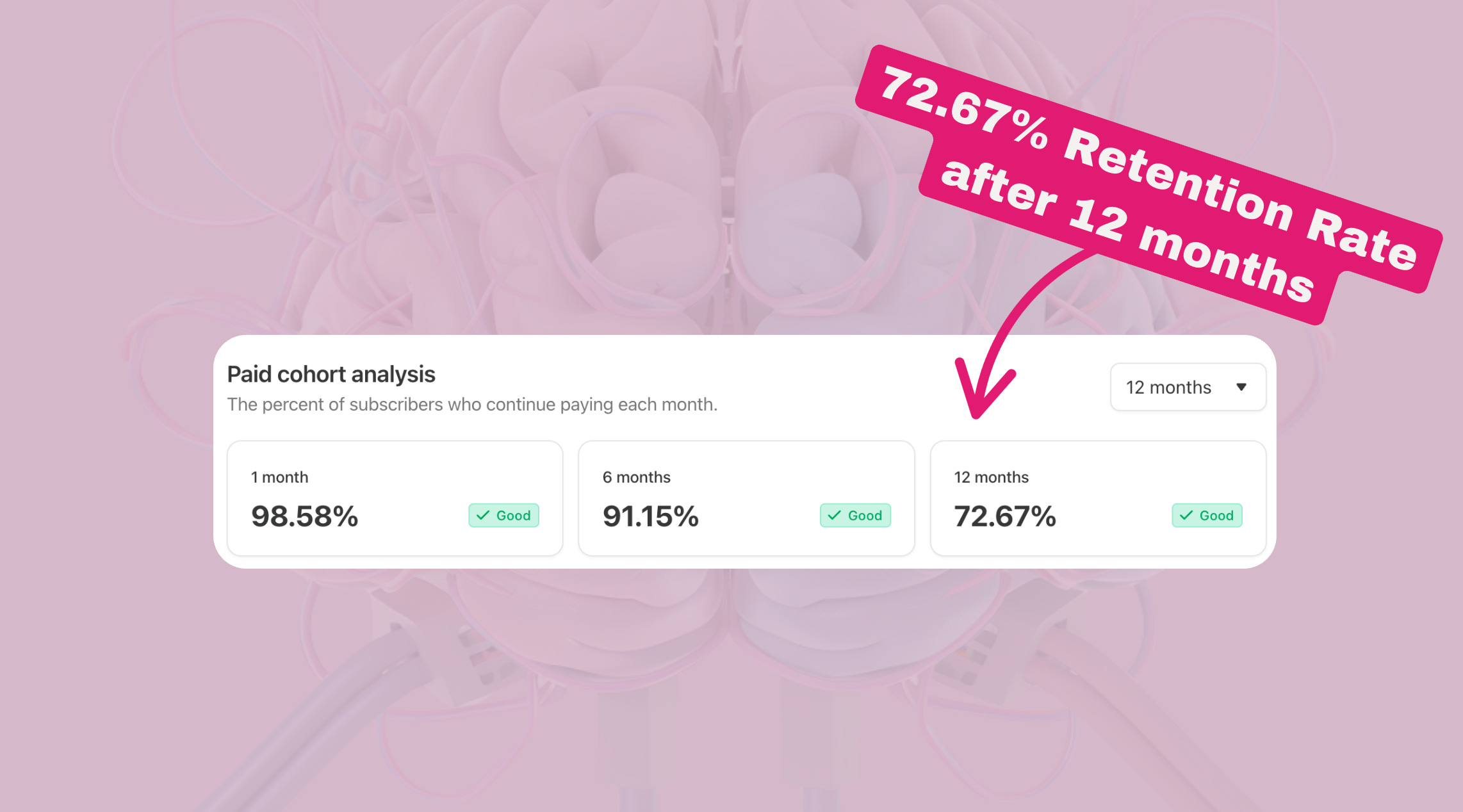
You’ll know you’ve nailed it by looking at two metrics:
Conversion rate — mine is 7%.
Retention rate — mine is 71.9% after 12 months.
2. Turn your paid content into digital products
If you think I’m gonna convince you that Substack is the “promised land”, you’re wrong.
A paid subscription is not enough to reach $10k in 13 months (like I did).
It needs much more work to be done.
Think of your newsletter as the engine.
Your products are the destination.
When you turn paid content into standalone products — guides, templates, GPTs, trainings — you unlock a new revenue stream from your free subscribers.
I use my paid subscription as a sandbox for new products.
This is how you monetize the 90% who may never upgrade.
But here’s the key: products don’t sell themselves.
You need to promote them.
Regularly.
I use emails that run in the background that keep nudging people toward the next step.
Some are automatic. Most of them are not.
If you sell courses, free masterclasses are the best way to sell them.
3. Build high-ticket services on top
This is the part people like to skip because it feels uncomfortable.
Coaching.
Consulting.
Strategy sessions.
Call it whatever you want, but make it exist. High-touch offers stabilize your income and turn your content into an actual business rather than a digital tip jar.
And the magic happens when all three layers connect:
Your subscription → leads to your products
Your products → lead to your services
Your services → reinforce the value of your subscription.
And you gain real insights from working with real people.
This is what I mean when I say “ecosystem.”
Most people think monetization is posting a sales email once in a while.
It’s not.
It’s the daily movement you embed into your content, your links, your funnels, your structure.
When everything is connected, $10K months become predictable (kind of)
Predictable doesn’t mean guaranteed.
Predictable means the system works regardless of how you feel today.
You still have to do the work.
When all three layers — subscription, products, services — work together, your audience doesn’t have to guess what to do next. They follow the path you designed.
That’s when revenue stops feeling random.
That’s when growth compounds.
That’s when you stop chasing the next viral post and start leveraging the ecosystem you built.
But here’s the part nobody warns you about:
Most writers struggle not because they lack talent, but because they drown in questions they don’t know how to answer.
What should I sell?
Who would buy it?
How do I structure it?
How do I write without confusing people?
How do I connect the dots?
All valid questions.
All solvable.
If you do just one thing right:
Start with the product, not the content. Build your content around a paid offer. That’s how you gain subscribers who pay.
You need the full picture before you can build the full system. And the full picture starts with just one painful problem to solve (turned into a product).
What most people get it wrong:
They start building an audience with no clear offer (so people won’t buy), or
They start with an imaginary product (and it doesn’t sell, even if the audience is right)
Yes, you need a product, and yes, you need an audience, but you need a product that solves one real (a.k.a. validated) problem of an audience that exists outside of your imagination.
Forget personas, avatars, or client maps. Go talk to people. Ask what they struggle with. Maybe you struggle with this too? Solve it for yourself, then build a product out of it.
$10k months aren’t about working harder.
They’re about working in structure.
And once you see the structure, you can’t unsee it.
Yana
P.S. I run a free masterclass where I help you, hands-on, design your first product ready to sell.